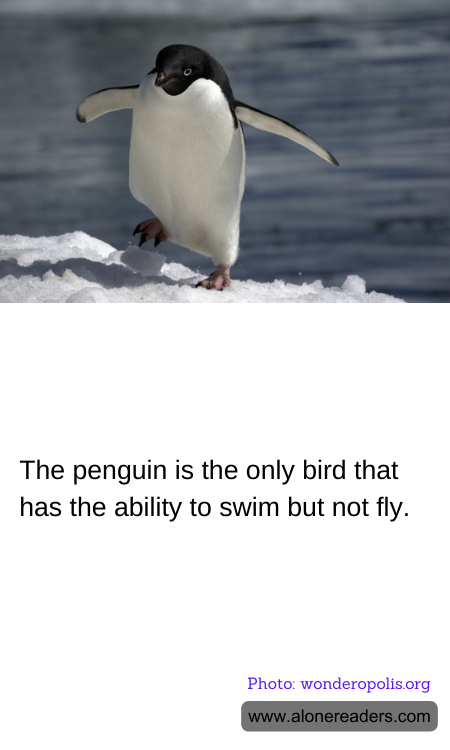
Penguins are truly fascinating creatures and unique among birds for their inability to fly combined with exceptionally adapted swimming skills. Found primarily in the Southern Hemisphere, particularly in Antarctica, penguins have evolved to thrive both on land and in the cold waters of the ocean. While most birds have lightweight bones to aid in flight, penguins have dense and heavy bones that help them remain submerged and navigate through water efficiently.
The penguin's body is perfectly designed for aquatic life. Their wings, unlike those of flying birds, function more like flippers, making them strong swimmers with the ability to maneuver skillfully under water. Penguins can often be seen propelling themselves rapidly to catch fish, their primary source of food, using a technique called 'porpoising', where they leap out of the water to breathe while continuing their speedy chase. Their average swimming speed is about 4-7 miles per hour, but they can accelerate up to speeds of 15 miles per hour when necessary.
Moreover, their distinct tuxedo-like black and white coloring, known as countershading, serves as camouflage and protects them from predators while they swim. The dark back surface blends with the dark ocean depths when viewed from above, while the white front can be mistaken for the bright sky when seen from below. This natural disguise plays a critical role in their survival, both from predators and when approaching their prey.
Aside from their physical traits, penguins are also known for their strong social bonds. They live in large colonies that provide protection against predators and help in rearing young ones. These colonies can sometimes consist of thousands of individuals. The social structure of penguin colonies is complex and includes activities like communal nesting and collective foraging, which illustrate advanced forms of social behavior.
Despite their adorable appearance and popularity in media and zoos, many species of penguins are vulnerable or endangered due to factors such as climate change, habitat destruction, and overfishing, which affect their food sources. Conservation efforts are critical to ensure that these remarkable birds continue to thrive in their natural habitats. Efforts include protecting breeding grounds, enforcing fishing regulations, and studying penguin populations to track changes and adapt conservation strategies accordingly.
In sum, while they may not take to the skies like other birds, penguins have carved a niche for themselves with their impressive aquatic abilities and charming social behaviors. They remind us of the diversity of nature's evolutionary pathways and the different forms of adaptation and survival.
