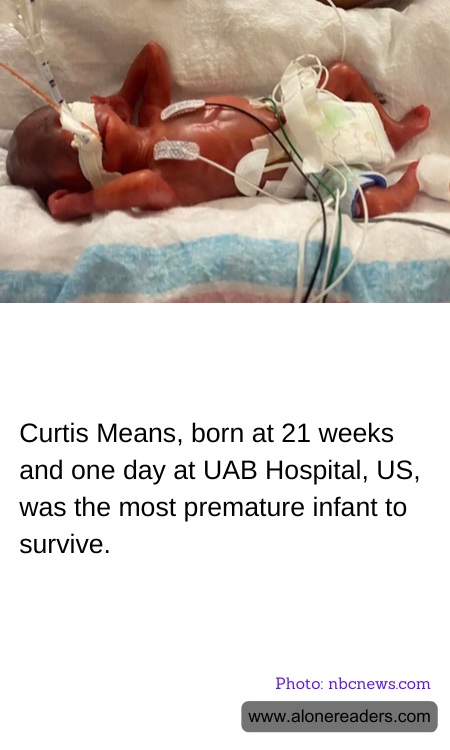
Born extremely premature at just 21 weeks and one day, Curtis Means defied medical expectations by surviving, setting a record for the most premature infant to ever survive. His birth took place at the University of Alabama at Birmingham (UAB) Hospital, where he received intensive care from a dedicated team of healthcare professionals. Curtis's remarkable story began when his mother, Michelle Butler, faced unexpected complications that led to his incredibly early delivery. Weighing just a fraction of an average newborn, his survival chances were initially deemed very low.
Premature births, particularly those occurring before 24 weeks (the general viability threshold), typically come with numerous health challenges. These can include respiratory issues due to underdeveloped lungs, brain development problems, and a host of other critical conditions that require immediate and sophisticated medical interventions. In Curtis's case, his care team utilized a tailored approach to meet his unique needs, employing advanced technologies and techniques that are at the forefront of neonatal care.
Curtis's journey in the neonatal intensive care unit (NICU) was fraught with hardships, but over time, he showed remarkable progress. His ability to overcome the myriad of hurdles associated with extreme prematurity is a testament not only to his resilience but also to the advancements in neonatal medicine and the skilled specialists who care for the tiniest patients.
Curtis's survival has provided the medical community with valuable insights into the treatment and care of extremely premature infants. His case stands as a beacon of hope for families experiencing similar challenges and underscores the importance of specialized healthcare facilities capable of handling complex neonatal cases. Moreover, stories like that of Curtis Means highlight ongoing debates and discussions in the medical community about the viability threshold and the ethical considerations in neonatal care.
As medical technology continues to advance, the survival rates for premature infants may improve, potentially shifting the current standards and practices in neonatal care. Curtis's story is not just a personal victory for him and his family; it represents a breakthrough in the broader medical arena, inspiring both healthcare professionals and the public.
