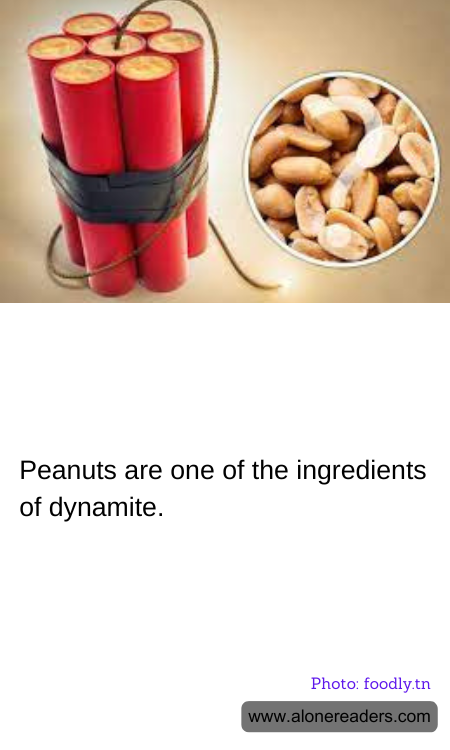
Peanuts, a popular snack rich in protein and healthy fats, have a surprising connection to an explosive material: dynamite. This unexpected link hinges not on the solid parts of the peanut, but rather on an oil derived from them. Peanut oil can be processed to produce glycerol, which in turn can be used to make glycerin. Glycerin is a key component in the production of nitroglycerin, an explosive liquid that was historically a primary ingredient in dynamite.
The story begins with the Italian chemist Ascanio Sobrero who first synthesized nitroglycerin in 1847. Although potent, nitroglycerin was extremely unstable, making it dangerous to handle and transport. It wasn't until 1867 that Alfred Nobel, a Swedish chemist and engineer, revolutionized its use by developing a safer, more stable form of nitroglycerin, which he called dynamite. Nobel achieved this by absorbing nitroglycerin into a porous material, such as diatomaceous earth, which stabilized the explosive properties of nitroglycerin without diminishing its power.
As for the peanuts, their role comes into play before the nitroglycerin stage. Peanut oil, when broken down through a process of hydrolysis, produces glycerol. Through a process known as nitration, glycerol is then converted into nitroglycerin. Although peanuts are not the only source of glycerol — it can also be derived from other oils and fats — their connection to the production of an explosive compound like nitroglycerin amplifies the versatility and importance of what might otherwise be seen as just a simple legume.
Today, the link between peanuts and dynamite isn't as direct as in the past. Modern dynamite no longer relies solely on nitroglycerin, thanks to advancements in materials science and the development of more stable and safer alternatives. However, the historical importance of peanut oil in the synthesis of glycerol, which could be processed into nitroglycerin, is an interesting footnote in the story of industrial chemistry, highlighting a fascinating example of how everyday substances can have extraordinary uses beyond their conventional applications.
