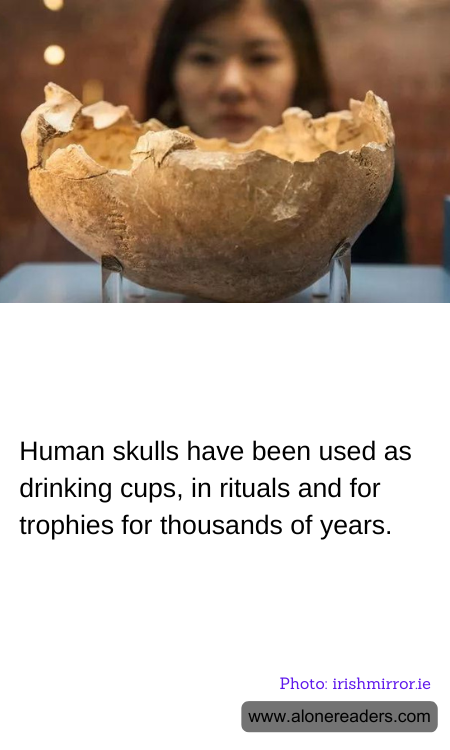
For thousands of years, human skulls have served a variety of purposes beyond their biological role, crossing into the realms of ritual, symbolism, and even daily utility. Across different cultures and eras, the transformation of a human skull into a drinking vessel or trophy, or its use in rituals, reveals much about the beliefs and social practices of those people.
The practice of using human skulls as drinking cups is historically documented among various warrior societies. For instance, the Scythians, ancient nomads of Eurasia, were reported by Herodotus, the Greek historian, to have drunk from the skulls of their enemies. Similar practices were noted among the Vikings and certain tribal groups in India, suggesting a symbolic act of dominance and prowess over defeated foes. By drinking from the skulls of their enemies, warriors believed they not only honored their victory but also absorbed the strength and spirit of the deceased.
In ritualistic contexts, skulls were often used in ceremonies aimed at communicating with ancestors or gods. Many indigenous cultures of the Americas used skulls in their rituals, involving them in everything from foundational rites for buildings to the consecration of new leaders. Skulls were believed to house the spirit of the person they once belonged to, making them powerful intermediaries in spiritual communication.
Moreover, in Tibetan Buddhism, skull cups, known as kapalas, are used in tantric rituals to represent impermanence and the transformation of matter to enlightenment. These cups, often elaborately carved or inlaid with precious metals and stones, are used to hold wine or dough cakes during rituals, symbolizing the transformation of desire into compassion and wisdom.
The use of skulls as trophies also underscores a history of human behavior linked to status and achievement. During the headhunting practices prevalent in some regions of Southeast Asia and the Pacific Islands, preserving the skulls of enemies was a part of the social fabric. These skulls were displayed prominently in homes or communal spaces, signifying both personal valor and communal defense.
Despite the diverse contexts in which skulls were used, a common underlying theme often relates to the concepts of power, respect, and memory. Whether as a cup, a religious artifact, or a trophy, a skull transcends its origin as a human remnant to become a vessel imbued with cultural and historical significance. This metamorphosis from the physical to the symbolic invites reflection on mortality and humanity’s enduring quest to understand life’s transient nature. As archaeology and anthropology continue to explore these practices, the role of human skulls in culture remains a compelling point of study, highlighting an intriguing intersection of death and life in human history.
