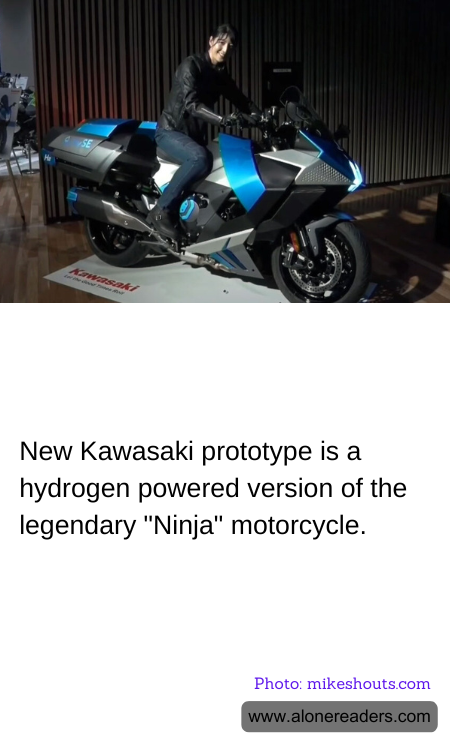
Kawasaki has always been a pioneer in the motorcycle industry, continuously pushing the boundaries of innovation and performance. The latest breakthrough comes in the form of a new hydrogen-powered prototype of their legendary "Ninja" motorcycle, cementing Kawasaki's commitment to sustainable technology without compromising on the thrill and speed that the Ninja is famous for.
The new prototype represents a significant shift in motorcycle technology, with a focus on green energy. Utilizing hydrogen as fuel, the prototype promises zero emissions, contributing significantly to environmental sustainability. This comes at a crucial time when the automotive industry is under increasing pressure to reduce carbon emissions and transition towards cleaner energy sources.
The design and engineering teams at Kawasaki have worked meticulously to integrate the hydrogen fuel system while maintaining the Ninja's iconic aesthetics and aerodynamics. The motorcycle features a state-of-the-art hydrogen fuel cell that converts hydrogen into electricity, powering an electric motor. This setup not only reduces the bike’s carbon footprint but also enhances the bike's performance due to the high efficiency of fuel cells compared to traditional combustion engines.
Kawasaki has also ensured that the transition to hydrogen does not alienate its customer base. The new Ninja retains all the qualities that have made the brand a favorite among motorcycle enthusiasts, such as high acceleration, sharp handling, and advanced rider-assist features. The prototype also showcases a cutting-edge hydrogen storage system, which ensures that the bike can cover distances comparable to its gasoline counterparts, addressing one of the significant hurdles facing hydrogen-powered vehicles: range.
In addition to its environmental and performance benefits, Kawasaki’s hydrogen-powered Ninja is designed to be just as engaging and thrilling to ride as the original models. This demonstrates an essential balance between innovation and tradition, a hallmark of Kawasaki’s approach to motorcycle development.
While still in the prototype phase, Kawasaki plans extensive testing to ensure reliability and safety. The company anticipates that this move towards hydrogen power will set a new standard in the motorcycle industry, encouraging other brands to explore alternative energy sources. Kawasaki hopes that the introduction of this prototype will lead to mass production in the near future, making environmentally friendly motorcycles more accessible to the public and paving the way for a cleaner, more sustainable mode of transportation on two wheels.
By breaking new ground with the hydrogen-powered Ninja, Kawasaki not only stays ahead in the race towards sustainability but also proves that the future of high-performance motorcycling can be as eco-friendly as it is exciting. This bold step forward highlights Kawasaki's dedication to innovation and their belief in the potential of hydrogen as a cornerstone of future motorcycle technologies.
