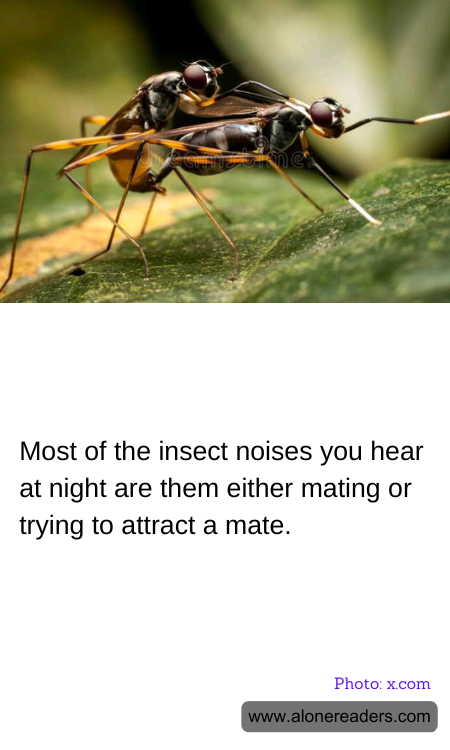
In the quiet of the night, the sounds of chirping, buzzing, and clicking insects become the soundtrack of the dark. Remarkably, most of these sounds, which can range from the soothing to the cacophonic, are indeed related to mating rituals. Insects use these sounds as a primary means of communication, particularly for attracting mates and repelling rivals.
One of the most common nocturnal noise-makers are crickets, who produce sounds through a process called stridulation. This involves the rubbing together of specific body parts—such as the wings in crickets and grasshoppers—to generate noise. The high-pitched song of the cricket is a call to potential mates, and the pitch and frequency of the sound can vary depending on the species and the intent of the call. For example, some songs are meant to attract females from afar, while others may be a close-range serenade.
Similarly, cicadas, which are often mistakenly considered synonymous with crickets, generate their distinctive drone by vibrating membranes on their abdomens called tymbals. This loud and often relentless noise serves the same purpose: to attract a mate and sometimes to establish territorial dominance. Each species of cicada produces a unique sound pattern, which ensures that the females respond to the correct call.
Among other examples are the katydids, which also use stridulation to communicate. Their sounds often resemble those of crickets but are typically less rhythmic and more continuous. The complex calls are not only about attracting mates but can also play a role in predator avoidance, as the continuous noise can make it difficult for predators to pinpoint their location.
Even the more reclusive, less noisy insects like beetles and moths use sound for mating purposes, though often these sounds are in frequencies that are not audible to human ears. Moths, for instance, may use very low or very high-frequency sounds to woo their potential partners without alerting predators to their presence.
Understanding these nocturnal calls provides more than just insight into the mysterious lives of insects. It helps in biodiversity studies and conservation efforts, especially in regions where the populations of specific insects are indicators of environmental health. Moreover, the ability of insects to use sound for communication is a fascinating example of evolutionary adaptation that emphasizes the diversity and resilience of life on Earth, illustrating once again how even the smallest creatures play pivotal roles in the natural world’s dynamics.
