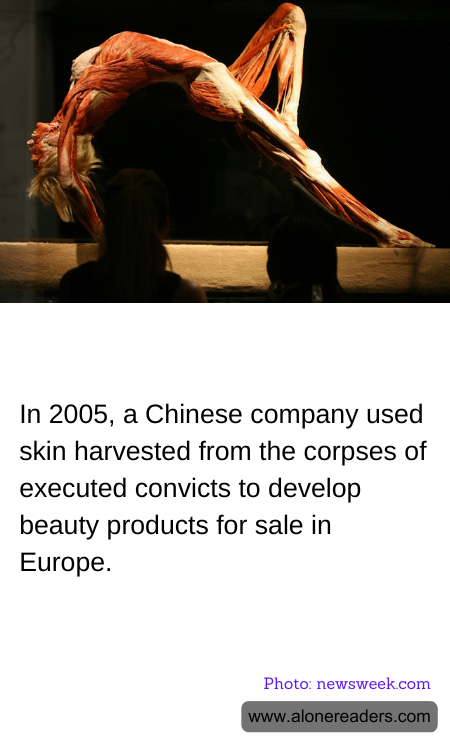
In one of the more controversial practices in recent history, it emerged in 2005 that a Chinese company was harvesting skin from executed convicts to develop beauty products. This revelation sparked worldwide ethical debates and brought to light the disturbing intersections between capital punishment and commercial enterprise. The usage of human skin derived from prisoners not only raised significant legal questions but also triggered an array of ethical concerns regarding consent, human rights, and the dignity of deceased individuals.
The practice came under scrutiny primarily because these convicts were often put to death without their explicit consent for their bodies to be used posthumously. Moreover, the families of the deceased were seldom informed about the post-mortem usage of the bodies, which breaches fundamental ethical practices regarding human remains. This issue was particularly sensitive in Europe, where the products were being marketed, leading to widespread public outrage and calls for stringent regulations to ban such imports.
European regulators and human rights organizations swiftly responded to these revelations. There were demands for clearer labeling on cosmetics and other products derived from human sources, as well as outright bans on imports of such products. The scandal not only impacted regulations on cosmetic products but also fueled the ongoing international debate about the death penalty and human rights abuses.
The implications of these practices are profound, affecting international relations, trade policies, and regulatory frameworks in the cosmetics industry. It highlighted the need for more rigorous ethical standards and transparency in the cosmetics sector and underlined the complex moral dimensions of globalization. This incident serves as a stark reminder of the necessity for ethical considerations in all aspects of production, especially when human lives are involved.
