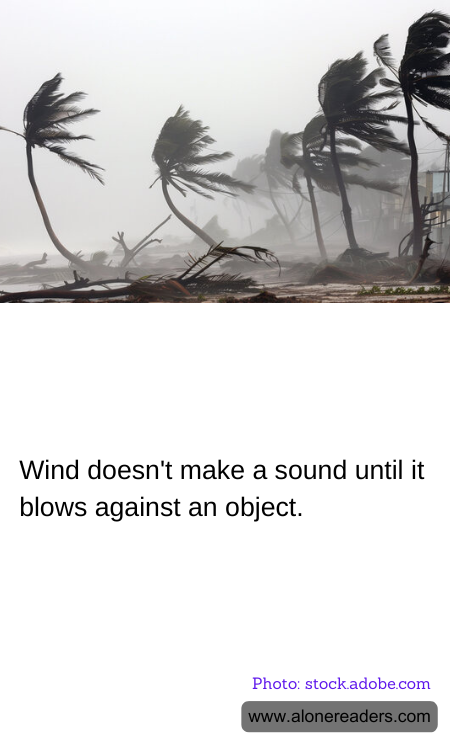
Wind itself is merely the movement of air from areas of high pressure to areas of low pressure, driven by the uneven heating of the Earth’s surface by the sun. By nature, wind is silent. However, the sounds we associate with wind, such as whispers through the trees, howls around buildings, or the whistle between cracks, are created when it encounters objects.
When wind encounters any kind of resistance - be it leaves, branches, windows, or buildings - it can cause these objects to vibrate, and these vibrations move through the air and generate sound waves. For instance, when wind blows through trees, the leaves may flutter and branches might rub against each other, producing rustling and creaking sounds respectively. Similarly, as wind is funneled through gaps in buildings or down streets, it can create a variety of sounds, depending on the speed of the wind and the nature of the obstacles. Faster winds generally produce louder sounds.
In the realm of science, this phenomenon is studied within the field of aerodynamics and acoustics. For engineers and architects, understanding how wind interacts with structures is crucial not just for noise reduction but also for ensuring the stability and integrity of their designs in the face of windy conditions.
Furthermore, wind sounds are not only a feature of our environment; they also play a significant role in different cultures. In many traditions, the sounds of wind are viewed as voices or messages from the spiritual world. They are featured prominently in storytelling, symbolizing changes or omens. Musicians and sound designers also mimic or directly use wind sounds to evoke moods of desolation, freedom, or eeriness in their compositions and soundtracks.
Thus, while wind might start its journey as a silent force of nature, its interaction with the environment fills the world with a symphony of sounds - each telling a different story about the world's complex and dynamic atmosphere.
