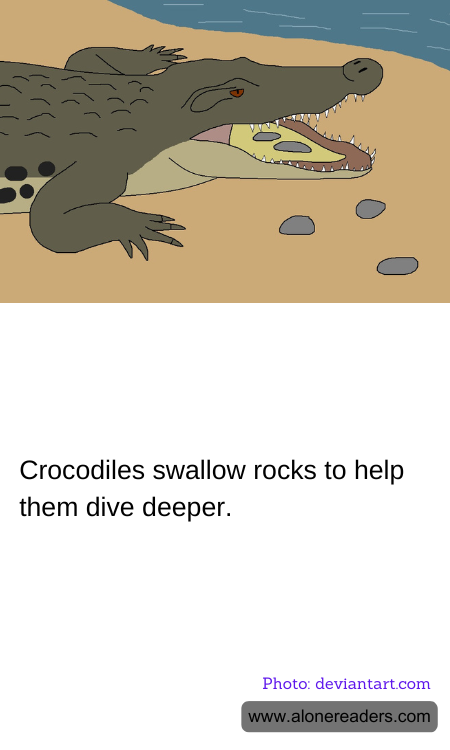
Crocodiles, one of the most ancient and fearsome predators on our planet, have fascinated scientists and wildlife enthusiasts for centuries with their unique behaviors and physiological traits. One lesser-known yet intriguing behavior observed among these reptiles is the swallowing of rocks—a phenomenon that may initially sound strange, but plays a crucial role in their survival and hunting efficiency.
Crocodiles are primarily aquatic creatures and rely heavily on their ability to control buoyancy and maneuverability underwater to catch prey. The ingestion of rocks, scientifically known as gastroliths, assists in this process. These stones, which the crocodiles deliberately consume, are stored in the stomach. They add weight to the crocodile, allowing it to achieve greater stability and control while submerged. This additional weight helps them to dive deeper and remain submerged for longer periods, making it easier for them to ambush prey from below.
Moreover, these rocks have another important function: aiding in digestion. The digestive system of a crocodile is highly efficient in processing food, particularly tough, fibrous materials such as bones and feathers that might be part of their diet. The rocks they ingest grind against the food in their stomachs, breaking it down into smaller, more manageable pieces. This not only maximizes the extraction of nutrients but also reduces the time food spends in their system, minimizing the risk of indigestion or blockages.
Not only do these practices highlight the crocodile’s adaptability and evolutionary innovations, but they also provide insights into the ecological roles of these reptiles in their habitats. By understanding behaviors such as rock swallowing, researchers can gain deeper insights into the complex interactions between crocodiles and their environment, contributing to more informed conservation strategies. For instance, studying such unique behaviors helps establish necessary protections for their habitats, ensuring that crocodiles—and the ecosystems they inhabit—continue to thrive.
In conclusion, the seemingly bizarre practice of swallowing rocks plays multiple essential roles in the life of a crocodile. From enabling more effective hunting to facilitating better digestion, this behavior underscores the complexity and sophistication of these ancient reptiles. As research continues, each discovery adds a piece to the puzzle of the crocodile’s ecological impact and its remarkable adaptations.
