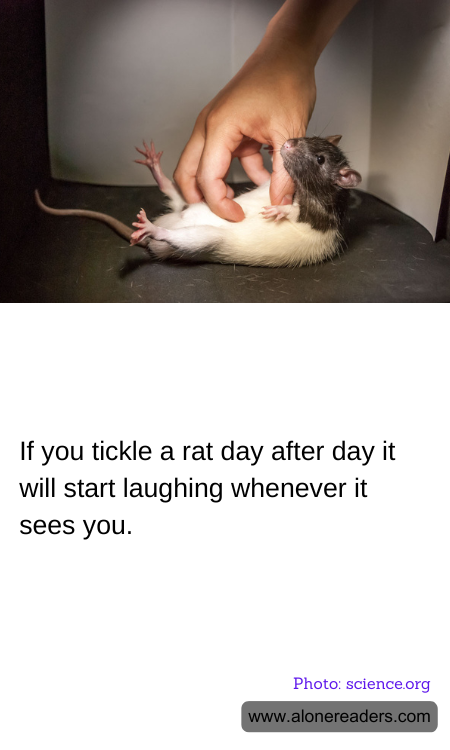
The idea that a rat might laugh when tickled might seem far-fetched, but scientific studies have explored this phenomenon, revealing intriguing insights into the emotional lives of these small mammals. While rats don’t laugh in the same way humans do, researchers have discovered that they emit high-pitched ultrasonic sounds, similar to chirping, when tickled, which are outside the range of human hearing without specialized equipment.
The discovery was initially made when neuroscientists observed juvenile rats engaging in playful behavior, which included producing these ultrasonic vocalizations. Curious about the context of these sounds, researchers began to simulate social play by tickling the rats, which prompted frequent chirping, indicating a positive emotional response. This response is thought to be similar to the joyful laughing seen in humans when engaged in playful activities.
The studies conducted primarily focus on understanding emotion in animals and can have broader implications. By identifying behaviors that indicate positive emotions in rats, researchers can also better assess their welfare in laboratory settings, ensuring they are kept in environments that promote their well-being.
Interestingly, not all rats respond to tickling in the same way. Just like humans, individual rats have different temperaments; some might enjoy the interaction while others might not react as much or at all. Further research also suggests that the brain’s response to tickling in rats is located in a region known as the somatosensory cortex, which processes touch. Activation in this area during tickling is similar to what happens in the human brain, leading to the speculation that tickling may tap into ancient brain circuits that are evolutionarily preserved across species.
Moreover, ongoing research explores the possibility that these tickling-induced chirps could play a role in how rats communicate with each other in their natural environment. It is hypothesized that beyond play, these vocalizations could help to strengthen social bonds between individuals in a group.
In essence, while tickling a rat might seem like a mere playful interaction, it opens up a window into understanding complex emotional responses and communication in animals. It reminds us that creatures we often overlook possess a richer inner life than we might initially consider. This research not only helps improve the conditions of laboratory animals but also enriches our understanding of the emotional landscape of the animal kingdom.
