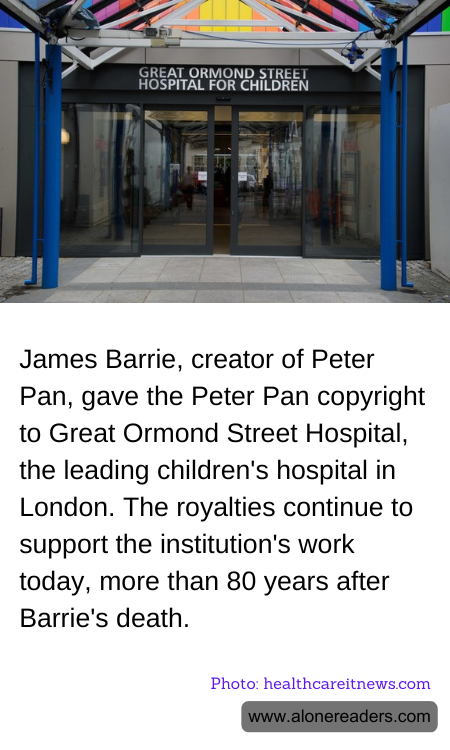
James Barrie, the acclaimed author of "Peter Pan," made a decision over a century ago that continues to have a profound impact today. In 1929, Barrie generously donated the copyright of his most famous literary work, Peter Pan, to Great Ormond Street Hospital (GOSH), a top children's hospital in London renowned for its commitment to pediatric healthcare. This bold move was unprecedented and highlighted Barrie's deep compassion and forward-thinking attitude.
Great Ormond Street Hospital, established in 1852, has since used the royalties from the copyright to fund vital medical research, purchase crucial equipment, and improve its facilities, which has enhanced the quality of care provided to its young patients. This enduring source of income has enabled the hospital not only to continue its legacy of medical innovation but also to maintain an environment that supports the health and well-being of children and their families.
The impact of Barrie’s gift extends beyond just financial advantage—it also raises continuous public awareness and support for the hospital. Year after year, performances, adaptations, and publications of Peter Pan generate significant income and publicity for GOSH. In particular, the Peter Pan royalties help finance the hospital's pioneering work, which includes treating rare and complex conditions. This has placed GOSH at the forefront of pediatric medicine, both in the United Kingdom and globally.
Moreover, Barrie’s donation serves as a heartwarming example of how literature can transcend pages to make real-world impacts. It reminds us how acts of charity can resonate well beyond the lifespan of the donor. More than 80 years after Barrie's passing, his legacy through Peter Pan continues to inspire and support some of the most vulnerable in society.
The story behind this altruistic gift adds a layer of magic to the already enchanting world of Peter Pan, intertwining fantasy with the real-life need and compassion, and ensuring that Peter's adventures keep providing hope, not only through his never-ending childhood in Neverland but also through the tangible benefits delivered to the children at GOSH. This perfect blend of literary fantasy and beneficial reality ensures that the boy who wouldn't grow up remains a symbol of enduring goodwill and supports the hospital's mission to help children thrive and recover.
