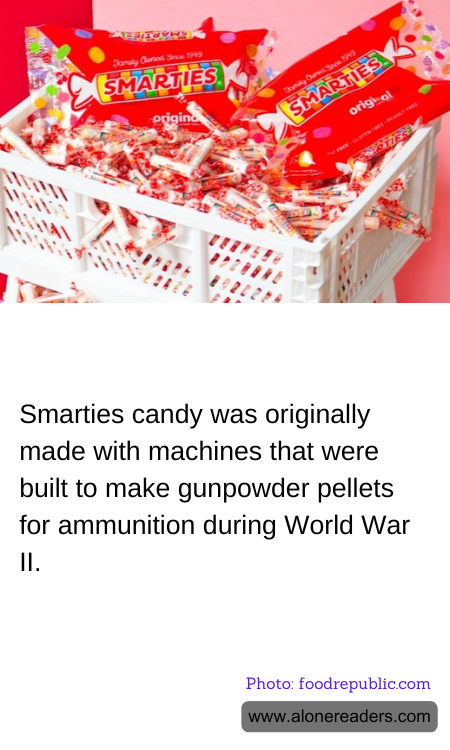
Smarties candy, a popular confection that comes in tablet form, has an intriguing connection to wartime technology. During World War II, the machinery used to manufacture Smarties was originally designed for a purpose far removed from creating sweet treats. These machines were initially built to make gunpowder pellets used in ammunition. This utilization of technology illustrates a fascinating example of post-war industrial conversion, where wartime innovations and machinery were repurposed for peacetime production.
The transition from manufacturing munitions to making candy might seem unusual, but it is a vivid demonstration of how industries pivoted to meet consumer demands in a radically changed economic landscape after the war. The machinery’s ability to press powder into compact pellets made it uniquely suitable for creating the small, compressed dextrose candies that we know as Smarties.
This adaptation not only highlights the resourcefulness of manufacturers but also showcases the technological ingenuity of the time. By repurposing their equipment, companies like the one that makes Smarties were able to swiftly transition from the production of wartime materials to consumer goods, aiding economic recovery and growth in the post-war period. Moreover, it gave rise to new consumer products that became staples in everyday life, reflecting a broader trend of innovation and retooling across various sectors.
Understanding the origins of Smarties provides insight into the broader historical context of the mid-20th century, shedding light on the ways industries can adapt and evolve. This piece of candy history is a small but poignant reminder of the interconnectedness of technology, history, and culture in shaping consumer products.
