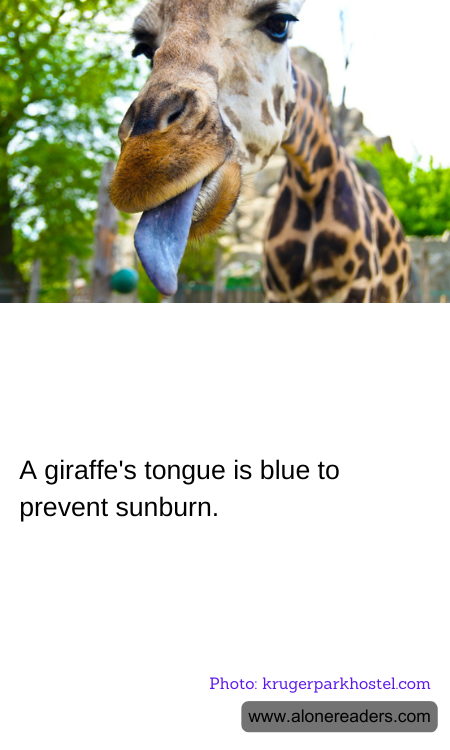
Giraffes, the tallest land animals on Earth, are not only known for their long necks and unique spot patterns but also for their peculiarly colored tongues. A giraffe's tongue is an intriguing shade of blue-black or dark purple, a distinctive feature that serves a crucial function beyond its striking appearance. This coloration is believed to protect them from sunburns, an essential adaptation given their natural habitat and behavior.
The reason for needing such protection lies in the giraffe's feeding habits. Giraffes spend a significant portion of their day eating, with a diet consisting primarily of acacia leaves and twigs. Acacia trees are typically tall with high foliage, compelling giraffes to feed with their heads up in the sunlight for extended periods. Given this, their tongues are frequently exposed to the harsh ultraviolet rays of the sun.
The blue-black pigmentation of a giraffe's tongue comes from melanin, the same pigment that colors human skin. In giraffes, this melanin is heavily concentrated in their tongues, which helps in absorbing the sunlight without causing damage. The dark color of the tongue lessens the risk of sunburns, which could be quite detrimental considering the amount of time their tongues are exposed while they feed.
This evolutionary trait highlights the adaptability of giraffes to their environment. Notably, the inside of a giraffe's mouth, not as exposed to the sun, is a lighter pink color, which is typical of most other animal species. This difference underscores the specialized nature of the pigmentation in their tongue.
Beyond its protective function, a giraffe’s tongue is remarkably adept at handling the spiny and thorny vegetation they consume. Their tongues can be as long as 18 to 20 inches and are highly flexible and prehensile. This allows giraffes to deftly grasp and strip leaves from branches, maneuvering around the sharp thorns of the acacia trees with ease.
In conclusion, the blue-black color of a giraffe's tongue is a fascinating example of how animals adapt to their environments. It protects the giraffe’s tongue from solar radiation while also serving significant roles in their feeding ecology. This feature is just one of many extraordinary adaptations that make giraffes unique among the animal kingdom.
