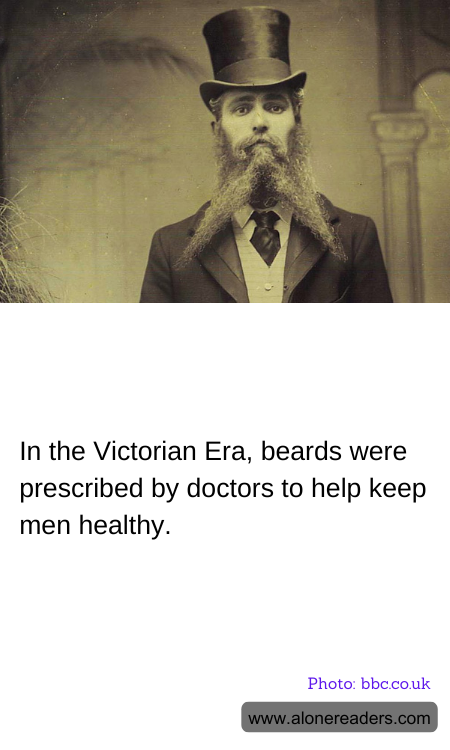
During the Victorian Era, the beard was not merely a style choice but was also believed to hold health benefits, and this notion was supported by some members of the medical community. The period, known for its particularities in health and hygiene, saw doctors prescribing beards as a means to prevent illness. This practice hinged on several interesting theories characteristic of the period’s medical understanding.
One prevalent theory was that beards were thought to act as a filter, trapping dust and germs before they could enter the mouth and respiratory tract. This belief suggested that wearing a beard could reduce one’s risk of contracting colds or other airborne diseases. The idea of the beard as a filter reflected the growing concern about urban pollution and poor air quality during the Industrial Revolution, as cities were crowded and smoke-laden.
Furthermore, beards were associated with a buffer against the harsh elements. In an age without widespread use of sunscreen and other protective skincare, thick facial hair could provide a degree of protection against windburn or sunburn, effectively insulating the face from the harsh weather conditions of the British Isles.
Doctors also sometimes argued that beards helped maintain youthful looks and vitality by preserving the natural oils of the skin, thereby preventing the drying and aging of the face. This claim further tied into the Victorian fascination with physical appearance and its perceived connection to moral and internal health.
Another layer to the prescription of beards relates to the period’s emphasis on masculinity. The resurgence of the beard, especially during the latter half of the Victorian Era, was tied to ideals of virility and strength. In this context, physicians' endorsements of facial hair also implicitly supported societal views about male robustness and health.
However, it is crucial to recognize that these medical endorsements were as much cultural as they were scientific. The Victorian medical field did not thoroughly understand germs until the latter part of the era, so many health-related recommendations, including those regarding beards, were based more on theory and anecdote than on concrete scientific evidence. As such, while some Victorians believed in the health protective properties of beards due to medical advice, these beliefs also reflected the broader societal and cultural norms of the time.
By today’s standards, the medical rationale for prescribing beards might seem unconventional or even quaint. Nevertheless, this historical tidbit offers a fascinating glimpse into how health advice and personal grooming intersected within the context of Victorian society, reflecting broader themes of health, aesthetics, and masculinity during the era.
