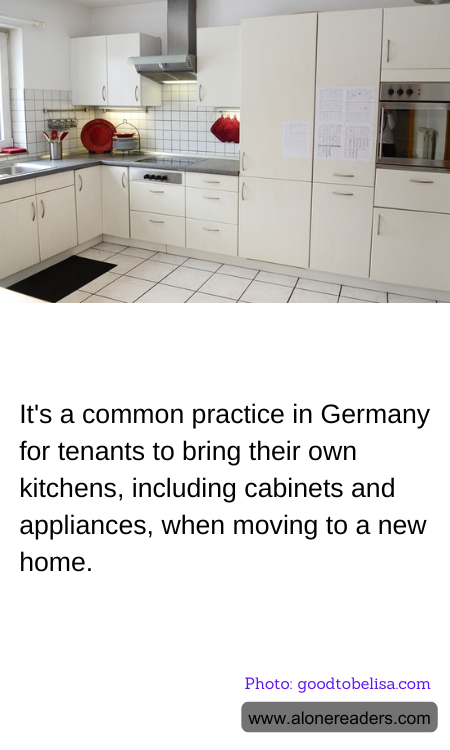
In Germany, the housing market has some unique characteristics that often surprise non-locals, one of which is the tradition for tenants to bring their own kitchens when they move into a new apartment. This practice includes not just portable items like refrigerators or ovens but also entire kitchen units, including sinks, countertops, and cabinetry.
The rationale behind this custom is rooted in German housing laws and cultural expectations. Typically, rental properties are let out as "bare bones" spaces, which means they might not include basic fittings that are standard in many other countries. This approach extends to the kitchen, one of the most personalized and central areas of a home. By requiring tenants to provide their own kitchen, landlords can offer lower rental rates and avoid the maintenance or style disputes that might arise from providing a fitted kitchen.
For tenants, while the initial outlay can be significant, this system allows for a high degree of personalization. Residents can choose a kitchen that fits their aesthetic preferences and functional needs, creating a space that truly feels like their own. This can be particularly appealing in a market where long-term renting is common, as in many German cities.
However, for expatriates or those not accustomed to this system, the requirement can come as a shock and add an extra layer of expense and planning to the moving process. Newcomers must either purchase a new kitchen, find a rental that comes with a kitchen (which can be more expensive), or buy a second-hand kitchen from previous tenants or through various marketplaces.
This aspect of the German housing market underscores the broader cultural emphasis on stability and personalization in living spaces, contrasting sharply with countries where renters move more frequently and rely on landlords to provide fully equipped properties.
