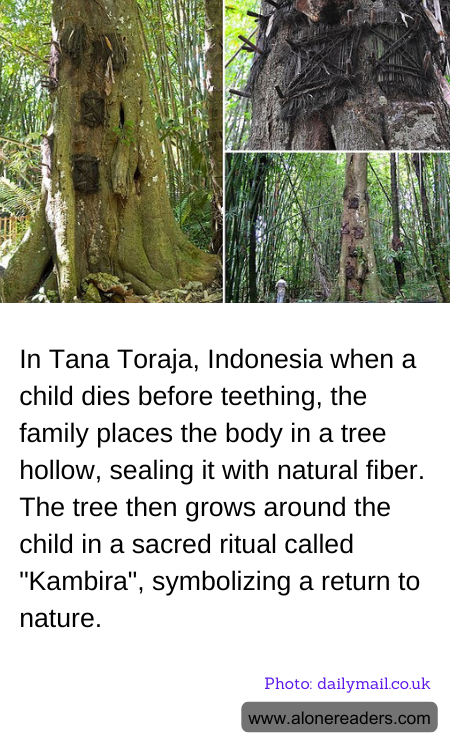
In the lush landscapes of Tana Toraja in Indonesia, a poignant and touching ritual known as "Kambira" is practiced for infants who pass away before they have begun teething. In this unique funeral custom, the grief-stricken families do not bury their child in the conventional sense. Instead, they gently place the body of the deceased child into a hollow within a living tree, symbolizing a tender and organic embrace as the tree slowly grows around the child. This act is steeped in the symbolic belief that the tree, often a Tarra tree which is considered sacred, is returning the child back to the nurturing cradle of nature.
The practice involves sealing the hollow with natural fibers, preserving the sanctity and purity of the ritual. This method of entombment provides a way for the soul of the infant to ascend toward heaven, supported by the life force of the tree itself. This interaction between the deceased and the tree is viewed not just as a burial, but as an eternal linkage and a cyclical gesture of life feeding life. Hence, the tree becomes a living monument to the child, growing and thriving with the passage of time.
More than just a method of interment, Kambira is a profound embodiment of the Torajan worldview, which sees death as a deeply integral part of life’s continuum. This cultural ethos reflects a harmonious bond with the environment, where death is managed with the same organic integrity as life. Here, grief and reverence are intertwined, and the traditional rites ensure that the memory and essence of the young ones are forever intertwined with the life-giving force of nature.
By integrating the dead so seamlessly into the natural world, the Toraja people foster an environment where the spirits are believed to watch over the living, offering protection and blessings. This cultural practice not only demonstrates the community’s profound respect and love for nature but also underscores their resilience and philosophical acceptance of death. The tree burial not only alleviates the pain of losing a child but also affirms life in its myriad connections, portraying death as a beginning rather than an end. Hence, Kambira is not merely a ritual but a poignant reminder of life's impermanence and the beauty of returning to the earth.
