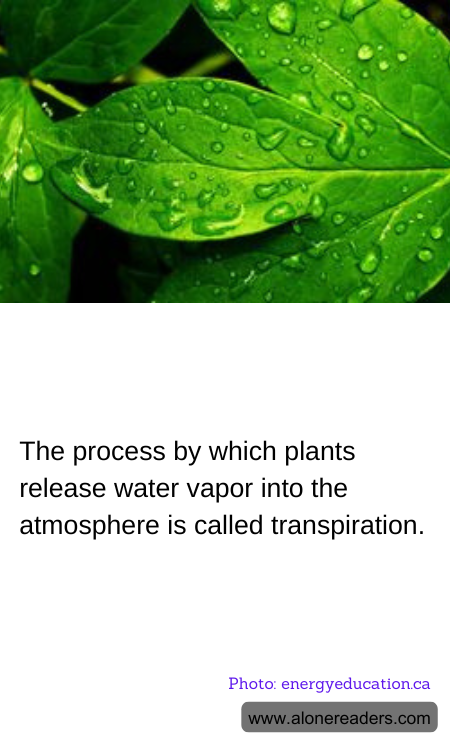
Transpiration is a crucial process in the water cycle and the overall health of the environment, akin to perspiration in animals. It primarily occurs in the leaves while their stomata – tiny openings on the underside of leaf surfaces – are open for the exchange of oxygen and carbon dioxide during photosynthesis. When these stomata open, water vapor from the plant is released into the cooler, drier air outside, creating a pressure gradient that facilitates this outflow of water vapor.
The role of transpiration extends beyond mere hydration regulation in plants. It is instrumental in transporting nutrients from the soil up into the plant. This ascension of nutrient-rich water from the roots through the plant system to the leaves and other parts of the plant is driven by capillary action and the resultant transpirational pull. Essentially, as water evaporates from the surface of the leaves, it pulls more water up through the plant from the roots, thus maintaining a continuous flow.
Environmental conditions such as temperature, humidity, wind, and soil water affect the rate of transpiration significantly. For example, higher temperatures or windy conditions increase transpiration rates because the moisture in the leaves is carried away more quickly. Conversely, higher humidity can reduce the rate as the air already holds a significant amount of water vapor, hence offering less of a gradient for moisture to move from inside the leaf to the outside air.
Transpiration has broader implications for the climate and the environment. It contributes to the formation of rain as the water vapor released condenses in the cooler upper atmosphere. It also plays a part in the cooling of the environment; evaporation is a cooling process, as the surface from which moisture evaporates loses heat. This aspect of transpiration can be particularly significant in urban areas where green spaces can provide a cooling effect, mitigating the urban heat island effect.
Moreover, understanding transpiration is crucial for effective water management in agriculture. Knowing when and how plants transpire can help farmers optimize irrigation practices, thus conserving water while ensuring healthy crop growth. As the global climate changes, studying patterns of transpiration can also provide insights into how plant behaviors may alter in new climatic conditions, which in turn affects biodiversity, crop yields, and water resources.
In sum, transpiration is a vital biological process that not only supports the physiological health of the plant but also influences local and global climate patterns and helps in the management of water resources. Through this mechanism, plants not only maintain their internal water needs and nutrient uptake but also contribute to the atmospheric processes that sustain ecosystems worldwide.
