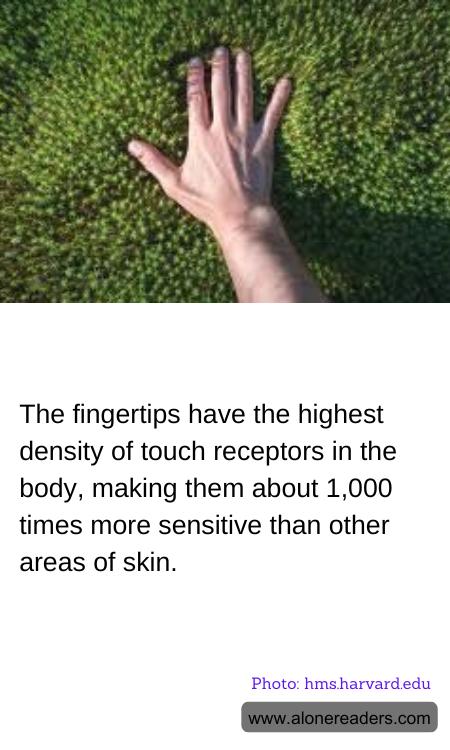
The human body is equipped with a complex and finely tuned sensory system, with the fingertips serving as one of the most sensitive and intricate parts of this system. The high density of touch receptors, specifically Meissner's corpuscles, in the fingertips makes them extremely sensitive to variations in texture, pressure, and vibration. This sensitivity is about 1,000 times greater than other areas of the skin, such as the back or the legs, which are much less endowed with these sensitive nerve endings.
This heightened sensitivity in the fingertips allows for the detailed and precise tactile feedback that is essential for performing tasks that require fine motor skills, such as typing, playing a musical instrument, or threading a needle. It also plays a critical role in our ability to explore and interact with our environment, enhancing our understanding of different materials and surfaces through touch. This capability is not just crucial in daily activities but also forms the basis of certain professions, particularly those requiring detailed manual dexterity, such as surgery or craftsmanship.
Furthermore, the evolutionary perspective provides insights into why such sensitivity in the fingertips has developed. For ancestors, the ability to feel even the slightest changes in the texture of an object could mean the difference between recognizing edible food and poisonous substances, or efficient tool use. This survival mechanism has carried through to modern humans, albeit serving more sophisticated functions.
This exceptional sensitivity of the fingertips also allows us to communicate and bond with other humans. The gentle touch of fingertips can convey affection, comfort, or reassurance. Additionally, researchers believe that the intricate network of nerves in our fingers may even contribute to emotional and social development, highlighting just how integral our sense of touch is not only for physical interaction with the world but also for emotional well-being.
Despite their robustness in sensitivity and functionality, the fingertips are also prone to damage due to their constant exposure and use. It's essential to protect and care for our hands to maintain this critical sense of touch, ranging from moisturizing regularly to guarding against physical harm. By understanding and appreciating the heightened sensitivity of our fingertips, we can better grasp their importance in both our evolutionary history and daily lives, ensuring we take the appropriate steps to protect this invaluable tool.
