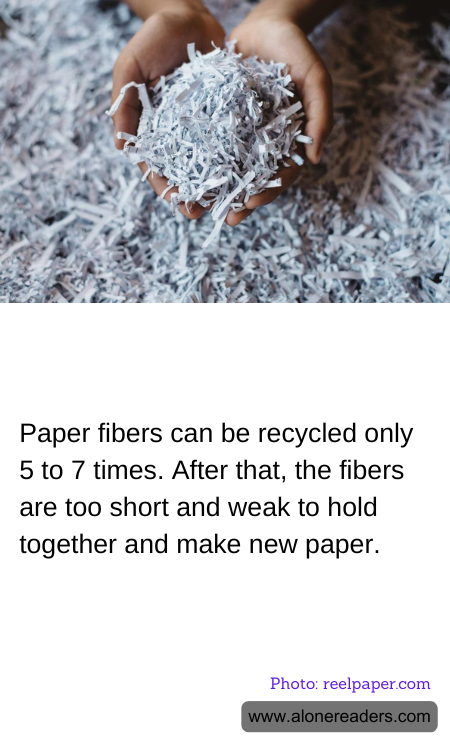
Paper recycling is a critical aspect of sustainable waste management, but the process isn't limitless. Paper fibers can typically be recycled only about 5 to 7 times before they become too short and weak to bind into new paper. This degradation occurs because each time paper is recycled, the fibers undergo processing that cuts, frays, and shortens them. Initially, long fibers like those found in virgin wood pulp have strong interlocking abilities, which give the paper its strength and durability. However, with each cycle through the recycling process, these fibers are progressively damaged and shortened, reducing their ability to interlink effectively.
The limit on recyclability poses significant challenges to environmental sustainability, as it means that fresh fibers from trees must continually be harvested to supplement the fiber loss in the recycling process. This process involves using large amounts of energy and water, contributing further to environmental strain. To extend the lifespan of paper fibers, various additives and strengthening agents are often introduced during the recycling process, but these can only delay the inevitable.
Fortunately, technologies and methods are continually being developed to extend the life of paper fibers or complement the need for virgin fibers. For instance, some industries have turned to alternative sources of raw materials, such as hemp and bamboo, which offer longer, stronger fibers that can withstand more rounds of recycling. Furthermore, efforts are being made to improve the efficiency of paper collection and sorting, which helps in preserving the quality of recycled fibers for longer.
Consumers can contribute to maximizing the useful life of paper fibers by ensuring that paper products are kept clean and dry and by removing contaminants such as staples and plastics before recycling. These small steps help maintain the integrity of the recycling stream, reducing the frequency at which virgin fibers need to be introduced.
In conclusion, while the limited recyclability of paper fibers presents challenges, ongoing technological advances and conscientious recycling practices hold promise for creating more sustainable paper usage cycles. As society continues to emphasize sustainability, the importance of both technological innovation and individual responsibility in recycling cannot be overstated.
