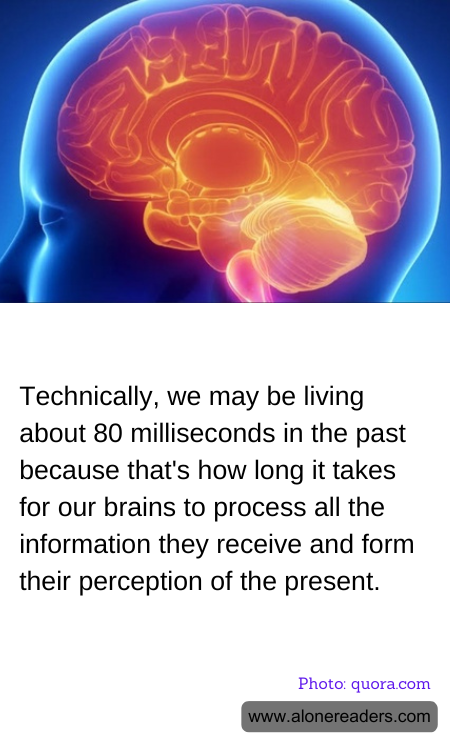
Our perception of the present moment is actually a complex construction of the mind, crafted from the barrage of sensory information we continuously receive. An intriguing aspect of this process is the notion that humans live slightly in the past—specifically, about 80 milliseconds in the past. This delay is due to the time it takes for our brains to process the sensory data into a coherent "now."
This processing lag means that by the time we are aware of a sensation, event, or thought, it has already occurred milliseconds earlier. The brain needs this fraction of a second to interpret signals from different sensory organs and weave them into a seamless perceptual experience. For instance, light and sound travel at different speeds, yet our brain synchronizes the information (such as seeing and hearing a fireworks display) into a single moment of experience.
This delay is generally imperceptible and doesn’t interfere with our daily interactions, largely because our brain compensates for these lags. For example, if a ball rolls towards you, your brain projects its future position, allowing you to react in what feels like "real-time." This predictive mechanism is so efficient that we seldom notice our sensory delay.
The understanding that we live slightly in the past highlights the amazing capabilities and adaptations of the human brain. It also poses fascinating questions about the nature of time and consciousness. Essentially, what we perceive as the present is a construction of our minds, sculpted with past data. This insight into how our brains process sensory information not only offers a glimpse into the mechanics of perception but also challenges our subjective experience of time and immediacy.
