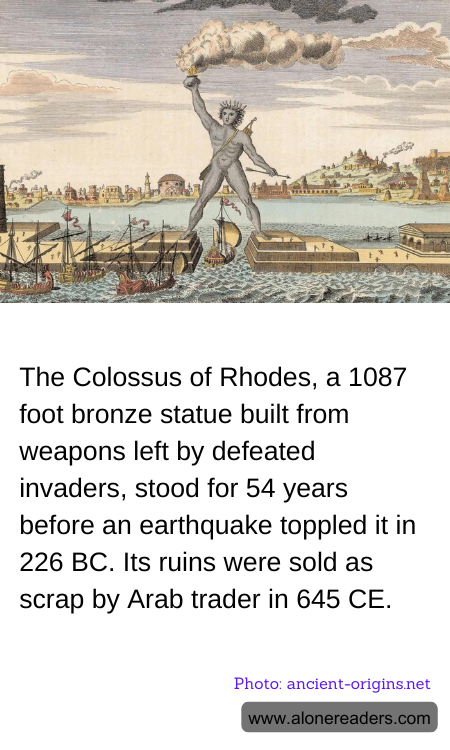
The Colossus of Rhodes, one of the Seven Wonders of the Ancient World, was an astonishing feat of engineering and a symbol of unity and strength for the people of Rhodes. This giant bronze statue, constructed in the 3rd century BC, reached an impressive height of approximately 108 feet (not 1087 feet as often misquoted), which would have made it one of the tallest statues of the ancient world. It was built to celebrate Rhodes' victory over the ruler of Cyprus in 305 BC, who had unsuccessfully besieged Rhodes with a large fleet and army.
According to historical accounts, the materials for the colossal statue were forged from the very weapons the besieging forces left behind after their retreat, a fitting tribute to the resolve and resilience of the Rhodians. Designed by the sculptor Chares of Lindos, the statue took 12 years to complete and was erected at the entrance of the harbor of Rhodes, serving both as a guardian of peace and a welcoming beacon to travelers and merchants.
Unfortunately, the giant figure stood for just 54 years before it was brought down by a catastrophic earthquake in 226 BC. The earthquake caused significant damage to the city and the statue, breaking it at the knees and toppling it to the ground. The oracle of Delphi advised the Rhodians not to rebuild it, saying the city had offended Helios, and fearing further reprisal, they left it lying in pieces.
For over 800 years, the ruins of the Colossus lay untouched until 654 CE, when an invading Arab force captured Rhodes. The remains of the statue were then broken down further and allegedly sold to a Jewish merchant of Edessa, who was said to have transported the bronze scrap on the backs of 900 camels. The proceeds of this sale likely served to fund military efforts or other needs of the Arab conquerors.
Today, no visible traces of the Colossus remain, but its legacy endures as a symbol of ingenuity and determination in the face of adversity. The story of the Colossus of Rhodes continues to capture the imagination of people around the world and serves as a poignant reminder of the impermanence of even the greatest human achievements.
