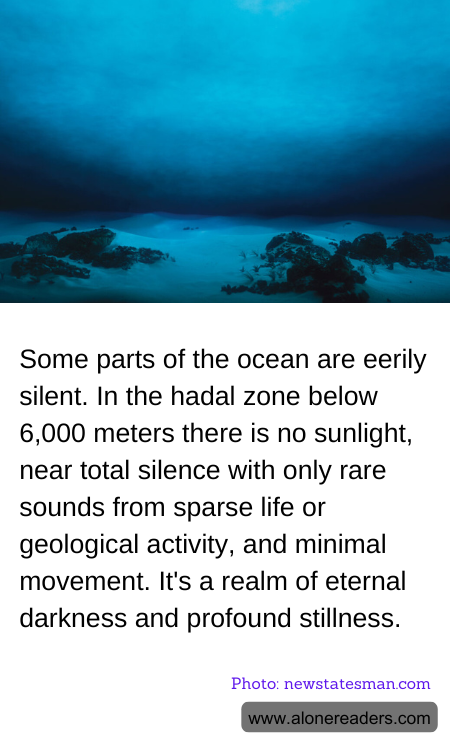
In the deep ocean, beyond the reach of sunlight, lies an enigmatic world known as the hadal zone. This region, beginning at depths of approximately 6,000 meters, extends to the deepest trenches of the ocean floor. The conditions here are harsh and otherworldly, characterized by immense pressure, frigid temperatures, and a complete absence of natural light. For these reasons, the hadal zone remains one of the least explored and understood habitats on Earth.
Despite these inhospitable conditions, life endures. The ecosystem in this deep-sea zone is primarily made up of highly specialized organisms that have adapted to survive in near-total darkness. These include certain types of fish, crustaceans, and worms which rely on chemosynthesis — a process by which organisms derive energy from the chemicals emitted by hydrothermal vents — instead of photosynthesis. The lack of light and scarce food sources contribute to a life that is scarce and spread out, leading to what is often an eerily silent environment.
The silence in the hadal zone is profound due to the near absence of human activity and the sparse occurrence of life. Occasionally, the silence is broken by the sounds of geological activity like underwater earthquakes or the infrequent movements of adapted organisms. The lack of noise contributes to the sensation of otherworldliness, amplifying the mystery and isolation of these deep-sea environments.
This deep-sea silence and darkness have significant implications not only for the organisms that inhabit these depths but also for our understanding of life itself. The unique adaptations and survival strategies of hadal zone creatures provide invaluable insights into the limits of life and the potential for organisms to exist under extreme conditions. This could have broader implications, ranging from understanding life on other planets to novel biological discoveries that could contribute to medicine and technology.
Despite the challenges, ongoing advances in deep-sea technology and increased interest in the secrets held by these deep, dark parts of our planet are slowly illuminating the hadal zone's mysteries. Each expedition brings us closer to understanding more about this quiet, dark, and extreme part of our world, potentially unlocking new scientific and biological discoveries. In doing so, we not only broaden our knowledge of the Earth’s biodiversity but also enhance our capacity to think beyond our terrestrial boundaries towards the broader universe.
