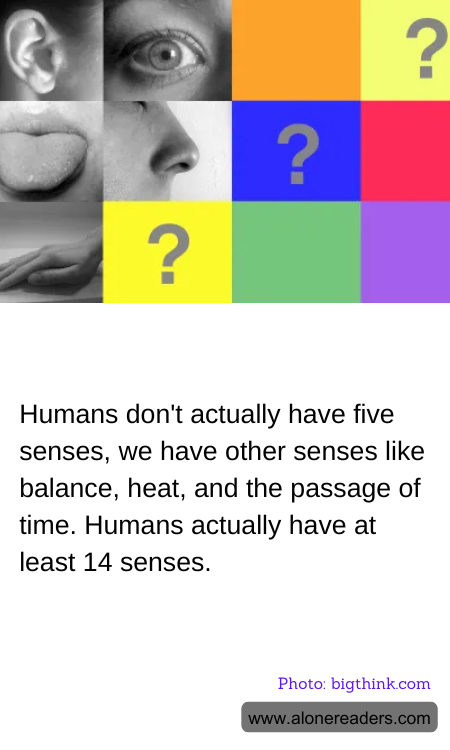
Contrary to the common belief that humans possess only five senses—sight, smell, taste, touch, and hearing—scientific research indicates that we are capable of experiencing far more. These additional senses play vital roles in our daily lives, often operating subconsciously to help us navigate the world. Among these lesser-known senses are proprioception, equilibrioception, thermoception, and chronoception, each responsible for distinct perceptual experiences that are essential for our survival and well-being.
Proprioception, sometimes called the "sixth sense," refers to the body’s ability to perceive its own position in space. It is why we can close our eyes and still touch our nose with a fingertip; muscle fibers and receptors within joints provide feedback to the brain about limb position and movement. Closely related is equilibrioception, or the sense of balance. Located in the inner ear, the vestibular system detects gravity and acceleration to help maintain stability whether we are stationary or in motion.
Thermoception, or the ability to sense temperature, is another critical sense that protects us from environmental conditions that could harm the body. This sense allows us to detect heat and cold in our environment through specific skin receptors, enabling rapid responses to potentially dangerous temperatures.
Chronoception, or the sense of time passing, is perhaps one of the most intriguing and mysterious senses. While researchers still do not fully understand how the brain processes time, it is clear that our perception of time can vary greatly based on circumstances, psychological states, and even age. This sense helps regulate our daily lives, from knowing when to sleep to timing a perfect jump while playing sports.
Other senses include nociception, the perception of pain, which is critical for avoiding injury or harm, and the chemoreceptive senses of hunger and thirst, which drive the consumption of food and water necessary for survival. Some scientists also explore the sense related to carbon dioxide levels in the blood, which significantly influences respiratory rate.
With such an array of senses beyond the traditional five, it becomes evident that human perception is complex and multifaceted, involving a sophisticated network of receptors, neural pathways, and processing areas in the brain. These systems work collectively to interpret the myriad pieces of information that come from both our internal and external environments, helping us to react appropriately and navigate our world with an impressive and nuanced perceptual awareness. As research progresses, our understanding of these senses will continue to evolve, potentially expanding the known sensory repertoire even further and offering deeper insights into human cognition and physiology.
