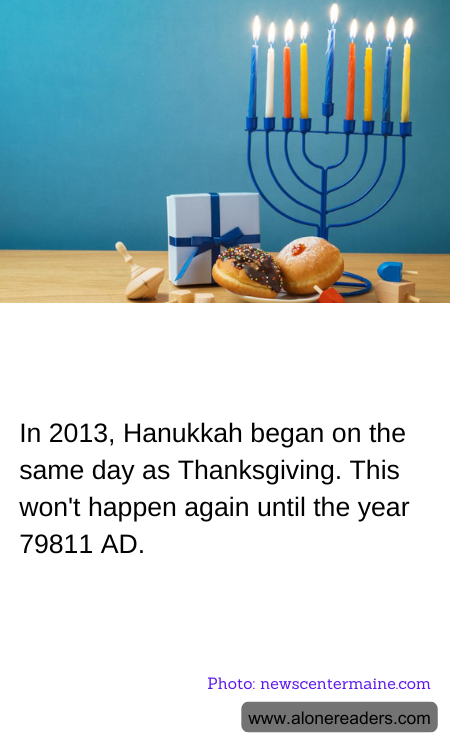
In 2013, an unusual convergence of the American calendar with the Jewish calendar resulted in the overlap of Thanksgiving and the first day of Hanukkah, an event playfully dubbed "Thanksgivukkah." This rare occurrence, fueled by the marching march of the Gregorian calendar set against the lunar cycles that determine Jewish holidays, unfolded into a cultural phenomenon across the United States. Families embraced the dual holiday with creative culinary fusions such as turkey-brined latkes and cranberry-filled sufganiyot, along with menorahs shining beside Thanksgiving cornucopias.
The convergence of Hanukkah and Thanksgiving is so uncommon due to the distinct methods by which dates are calculated in the Gregorian and Jewish lunar calendars. While Thanksgiving is fixed on the fourth Thursday of November, Hanukkah's date drifts slightly each year because the Jewish calendar is lunisolar. The day Hanukkah begins can fall anywhere from late November to late December.
According to calculations, this overlapping will not occur again for almost 77,800 years, making Thanksgivukkah a once-in-a-lifetime experience for all who celebrated in 2013. The rarity of the event drew significant media attention and public interest, even inspiring legislation in the U.S. to acknowledge the unique cultural celebration. The phenomenon highlighted the rich mosaic of American cultural and religious life, showing how overlapping traditions can create new opportunities for celebration and reflection. As such, Thanksgivukkah stands as a testament to the ever-evolving, pluralistic society that characterizes the United States, providing a delightful, if fleeting, fusion of festivities.
