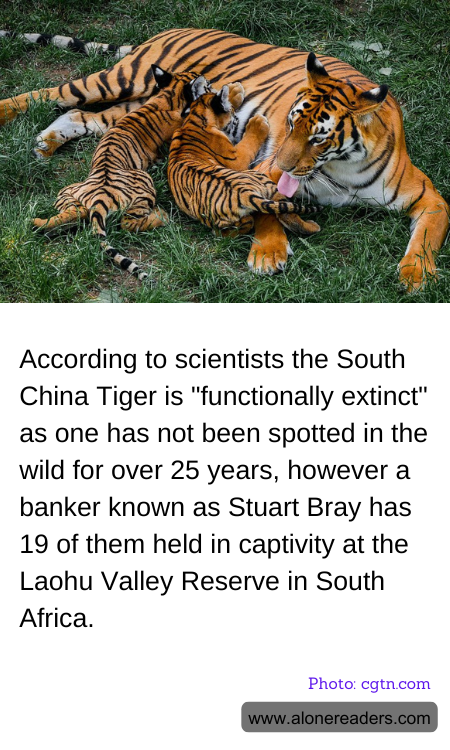
The South China Tiger, once prevalent across southern China, has experienced a drastic population decline, leading scientists to declare it "functionally extinct" in the wild. The term implies that there are so few individual tigers left in their natural habitat that they do not play a significant role in the ecosystem anymore. One of the striking aspects of this conservation crisis is that no wild sightings of the South China Tiger have been reported for over 25 years, signaling a bleak outlook for this subspecies' survival in its native range.
Amidst this dire situation, there is a glimmer of hope spearheaded by an unexpected conservation effort from Stuart Bray, a banker who has taken a unique approach to saving these majestic animals. Bray is currently housing 19 South China Tigers at the Laohu Valley Reserve in South Africa. This choice of location might seem unusual considering it's far from the tiger's native habitat. The rationale behind situating the reserve in South Africa stems from the availability of large tracts of land and a more controlled environment which may offer better conditions for breeding programs than the tiger’s depleted and fragmented habitats in China.
Bray’s efforts include not only protecting these tigers but also preparing them for a potential reintroduction into the wild, which involves training the tigers to hunt and fend for themselves. This rigorous conditioning aims to rekindle the instincts that the tigers would need to survive independently in the wild. The overarching goal of such an ambitious project is to eventually repopulate parts of China’s forests with these tigers, thereby reintroducing a crucial predator into the ecosystem.
While the project has faced its fair share of skepticism and logistical challenges, it stands as a testament to the innovative approaches being employed in modern conservation. Bray's initiative may offer a template for similar efforts for other species that are teetering on the brink of extinction. As the global community continues to grapple with the biodiversity crisis, such proactive efforts are vital. The survival of the South China Tiger depends not only on the success of breeding and reintroduction efforts but also on the restoration and protection of their natural habitats along with the support and cooperation from the local communities and governments. This complex interplay of factors underscores the multifaceted nature of wildlife conservation in today's rapidly changing world.
