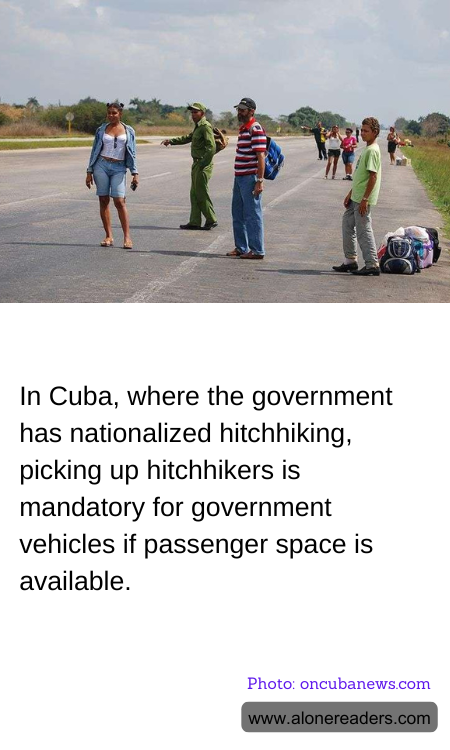
In Cuba, the act of hitchhiking is not just a casual practice but a structured component of the public transport system, directly influenced by state policies. This unique approach is primarily due to the country's transport shortages and economic conditions, which have led to innovative solutions for mobility. The government has effectively nationalized hitchhiking, introducing regulations that require government vehicles to pick up hitchhikers whenever there is available passenger space.
This policy is facilitated by a state-run system, where designated officials, known as "amarillos" (yellows) because of their distinctive yellow uniforms, organize and oversee hitchhiking at key points along major routes. These officials use their authority to stop government vehicles and ensure that drivers comply with the hitchhiking mandate. This system not only helps in alleviating transportation shortages but also maximizes the usage of state-owned vehicles, contributing to a more efficient use of national resources.
The integration of hitchhiking into the national transport policy reflects Cuba's broader approach to community and shared resources. It is a vivid example of how the Cuban government adapts to the island’s economic challenges through community-oriented strategies and stringent management of state assets. Moreover, it also highlights the resilience and inventiveness of the Cuban people in the face of infrastructure and economic hurdles.
However, while the system has its benefits, including cost savings for passengers and increased access to transportation, it also displays the challenges of a transport system heavily reliant on government coordination and control. Dependence on such a system can lead to inconsistencies and inefficiencies when there are not enough government vehicles available, or when the system is strained under heavy demand.
Despite these challenges, the mandatory hitchhiking rule in Cuba stands as a remarkable example of how legislative frameworks can directly shape everyday practices and cultural norms. It underscores a distinctly Cuban solution to transportation, marked by a blend of innovation, communal assistance, and government directive, offering a fascinating glimpse into the island's unique socio-political landscape.
