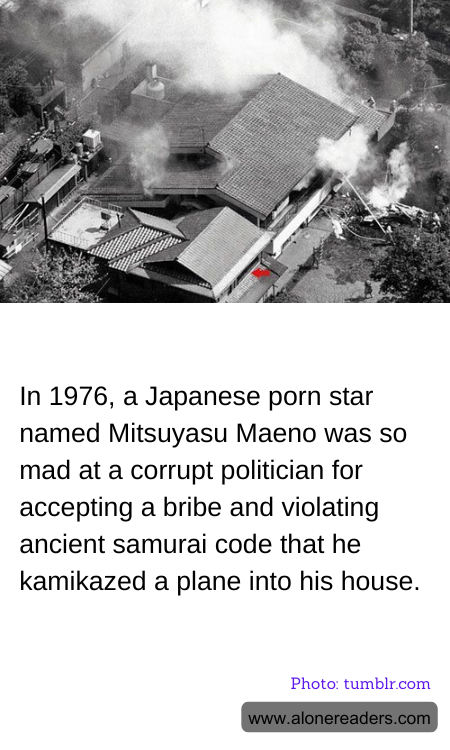
In 1976, Japan witnessed an incredibly dramatic and tragic event that bridged the worlds of cinema, politics, and ancient samurai culture. Mitsuyasu Maeno, a Japanese pornographic film actor, shocked the nation by undertaking a kamikaze-style suicide attack on the home of Yoshio Kodama, a prominent businessman and right-wing political figure.
Mitsuyasu Maeno was not just an actor but also a devoted practitioner of the samurai code, which emphasizes honor, bravery, and loyalty. Maeno became incensed upon learning that Kodama, an influential figure in Japanese politics, was involved in the Lockheed bribery scandals. Kodama was accused of accepting bribes from the American aerospace manufacturer Lockheed Corporation to influence airplane sales in Japan. For Maeno, Kodama’s actions were not only illegal but a disgrace to the principles of the samurai culture to which he adhered.
Driven by his outrage and shaken by the erosion of traditional values he so deeply respected, Maeno decided to take drastic action. On March 23, 1976, after renting a small aircraft under the pretext of taking it for a scenic flight, Maeno veered off his expected flight path. He had painted the aircraft with slogans denouncing Kodama and steadily maneuvered the plane towards Kodama's residence in Setagaya, Tokyo. Despite his determined efforts, Kodama survived the attack as the plane crashed into an empty area of his property, causing significant destruction but not harming the intended target.
This act did not just symbolize Maeno’s condemnation of corruption; it was also an expression of an extreme adherence to samurai values in a modern context where such actions are generally incomprehensible. The incident left Japan and the wider world stunned, serving not only as a grim spectacle but also as a poignant reminder of the clashes between traditional beliefs and contemporary realities.
The fate of Mitsuyasu Maeno was sealed by the very values he cherished, encapsulating a tragic blend of dedication, disillusionment, and despair. His actions are remembered as a dramatic footnote in Japan’s complex interplay of culture, politics, and morality during a period of significant economic and social transformation.
