More About This Card
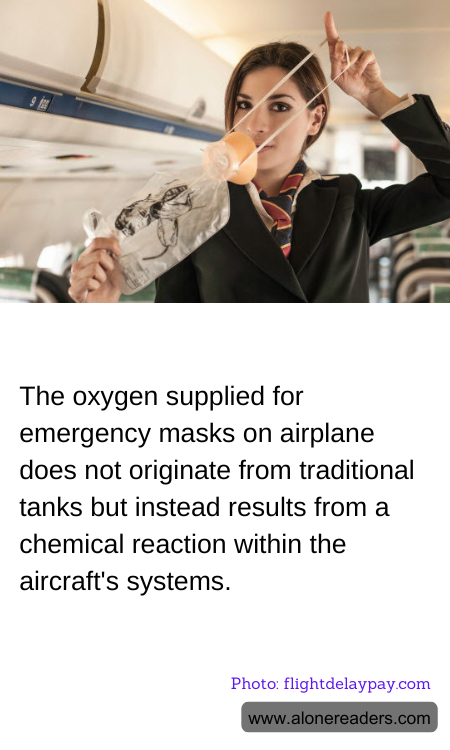
When flying at high altitudes, passengers are often reassured by the presence of emergency oxygen masks, which are designed to drop from overhead compartments in the event of cabin depressurization. However, many people are surprised to learn that the oxygen supplied through these masks does not come from traditional oxygen tanks. Instead, it is generated through a fascinating chemical reaction that takes place within the aircraft's systems.
The process begins with a device known as a chemical oxygen generator. These generators are compact and efficient, making them ideal for use in the confined spaces of an airplane. Inside each generator is a mixture of chemicals, typically including sodium chlorate and iron powder. When the emergency oxygen masks are deployed, a firing pin is triggered, igniting the chemical mixture. This ignition causes a reaction that produces oxygen gas, which is then channeled through the masks to passengers.
This method of oxygen generation offers several advantages over traditional tanks. First and foremost, chemical oxygen generators are much lighter and take up less space, which is crucial in an environment where weight and space are at a premium. Additionally, these generators can produce oxygen on demand, ensuring that passengers have a continuous supply during an emergency. This is particularly important because the time to descend to a safe altitude can vary depending on the aircraft's altitude and location.
Safety is, of course, a primary concern in aviation, and the use of chemical oxygen generators is no exception. These systems are designed to be highly reliable, with rigorous testing and maintenance protocols in place to ensure their functionality. The chemical reaction is carefully controlled to prevent overheating, and the generators are housed in fire-resistant containers to mitigate any potential risks.
While the idea of a chemical reaction occurring above your head might seem daunting, it is important to remember that these systems have been used safely in commercial aviation for decades. The technology is well-proven, and the industry continues to refine and improve these systems to enhance passenger safety.
In conclusion, the oxygen masks on airplanes are a testament to the ingenuity and engineering prowess of the aviation industry. By utilizing chemical reactions to generate oxygen, airlines can provide a reliable and efficient emergency system that ensures passenger safety without the need for bulky and heavy oxygen tanks. The next time you board a flight, you can take comfort in knowing that, should the need arise, a sophisticated and well-tested system is in place to provide you with the oxygen you need.