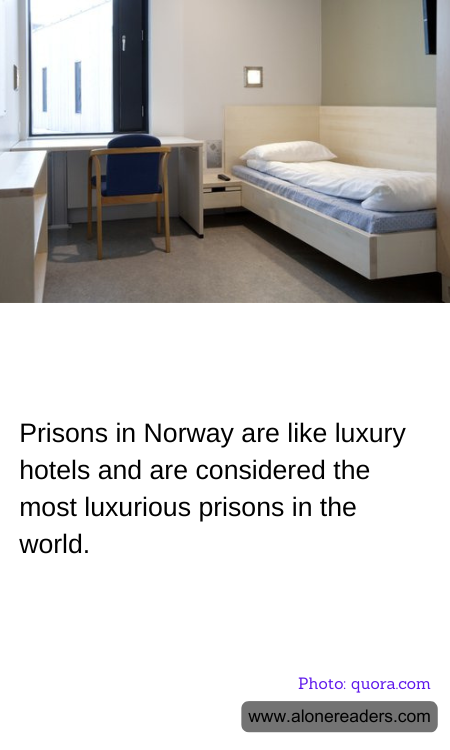
Norway's approach to incarceration has garnered international attention for its unique and humane philosophy, often drawing comparisons to luxury hotels rather than traditional prisons. This Scandinavian nation has redefined the concept of imprisonment, focusing on rehabilitation over punishment, which is evident in its state-of-the-art facilities and progressive policies.
At the heart of Norway's prison system is the belief that treating inmates with dignity and respect can lead to better outcomes for both the individuals and society. Halden Prison, often cited as the most luxurious prison in the world, exemplifies this approach. Located in a serene forested area, Halden features modern architecture with large windows that allow natural light to flood the rooms, creating a calm and inviting atmosphere. Inmates have access to private rooms equipped with flat-screen televisions, mini-fridges, and en-suite bathrooms, offering a stark contrast to the stark and often overcrowded conditions found in many other countries' prisons.
Beyond the physical amenities, Norway's prisons emphasize personal development and rehabilitation. Inmates are encouraged to engage in educational programs, vocational training, and recreational activities. The goal is to equip them with the skills and knowledge necessary to reintegrate into society successfully. The prison staff, including guards, are trained to interact with inmates as mentors rather than enforcers, fostering a supportive environment that promotes personal growth and responsibility.
Norway's approach is not without its critics, who argue that such luxurious conditions may undermine the punitive aspect of incarceration. However, the country's low recidivism rates suggest otherwise. Norway boasts one of the lowest rates of re-offending in the world, a testament to the effectiveness of its rehabilitative model. By focusing on the root causes of criminal behavior and providing inmates with the tools to change their lives, Norway has created a system that not only benefits the individuals involved but also enhances public safety.
The Norwegian model challenges traditional notions of justice and punishment, offering a compelling alternative that prioritizes human rights and social reintegration. While it may seem unconventional to some, Norway's luxurious prisons serve as a reminder that treating people with compassion and respect can lead to transformative outcomes. As more countries grapple with the challenges of overcrowded and ineffective prison systems, Norway's example provides valuable insights into the potential for reform and innovation in the realm of criminal justice.
