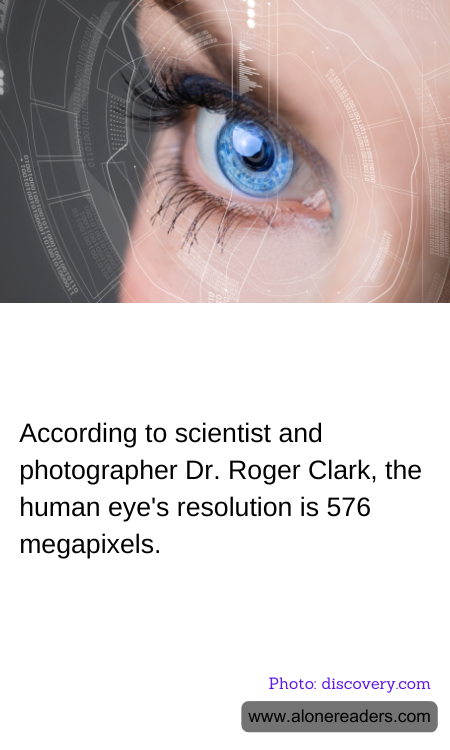
The human eye is a marvel of biological engineering, capable of perceiving the world in vivid detail and vibrant color. According to Dr. Roger Clark, a scientist and photographer, the resolution of the human eye is equivalent to an astonishing 576 megapixels. This comparison to digital cameras provides a fascinating perspective on the complexity and capability of human vision.
To understand this comparison, it's essential to consider what a megapixel represents. In digital imaging, a megapixel is one million pixels, and each pixel captures a tiny portion of an image. Modern digital cameras boast resolutions ranging from a few megapixels to over a hundred in high-end models. However, the human eye, with its intricate structure and sophisticated processing capabilities, far surpasses these devices in terms of resolution.
The eye's resolution is not just about the number of photoreceptor cells—rods and cones—located in the retina. It also involves the brain's ability to process and interpret the information these cells capture. The fovea, a small pit in the retina, is densely packed with cones and is responsible for sharp central vision. This area allows us to see fine details and vibrant colors, contributing significantly to the eye's high resolution.
Moreover, the eye's dynamic range and ability to adapt to varying light conditions further enhance its performance. Unlike a camera, which requires adjustments to capture images in different lighting, the human eye can seamlessly transition from bright sunlight to dimly lit environments. This adaptability, combined with the brain's processing power, allows us to perceive a continuous, high-resolution image of our surroundings.
While the comparison to 576 megapixels is a useful way to appreciate the eye's capabilities, it's important to note that the human visual system operates differently from a digital camera. The eye captures images in a continuous stream, and the brain stitches these images together to create a coherent view of the world. This process involves complex neural pathways and cognitive functions that go beyond mere pixel count.
In essence, the human eye is a testament to the wonders of evolution, providing us with a rich and detailed perception of the world. Dr. Roger Clark's comparison to 576 megapixels serves as a reminder of the incredible capabilities of our natural vision, which continues to inspire advancements in technology and deepen our understanding of the human body. As we explore the limits of digital imaging, the human eye remains a benchmark of excellence, demonstrating the intricate balance between biology and perception.
