More About This Card
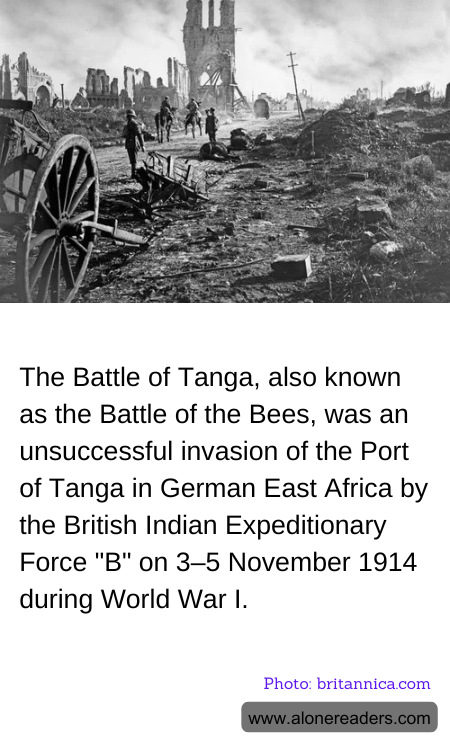
The Battle of Tanga, often referred to as the Battle of the Bees, was a significant yet unsuccessful military engagement during the early stages of World War I. Taking place from November 3 to November 5, 1914, this battle saw the British Indian Expeditionary Force "B" attempt to capture the strategic port of Tanga in German East Africa, now part of modern-day Tanzania. The operation was part of a broader British strategy to weaken German colonial influence in Africa and secure key territories.
The British force, composed mainly of Indian troops, was led by Major General Arthur Aitken. The plan was to launch a surprise attack on Tanga, which was lightly defended by German colonial forces under the command of Lieutenant Colonel Paul von Lettow-Vorbeck. However, the element of surprise was lost due to delays and miscommunications. The British troops landed on the beaches near Tanga, only to find themselves facing a well-prepared German defense.
One of the most unusual aspects of the Battle of Tanga was the unexpected involvement of swarms of bees. As the British troops advanced, they inadvertently disturbed several beehives, causing the bees to attack both sides indiscriminately. This chaotic situation added to the confusion and disarray among the British ranks, further complicating their efforts to organize a coherent assault.
Despite their numerical superiority, the British forces struggled against the well-entrenched German defenders. The Germans, utilizing their knowledge of the terrain and effective defensive tactics, managed to repel the British attacks. The battle saw intense fighting, with the British suffering significant casualties. The combination of fierce resistance, logistical challenges, and the unexpected bee attacks led to a demoralizing defeat for the British.
The failure at Tanga had far-reaching implications. It was a major setback for the British in East Africa and bolstered the reputation of von Lettow-Vorbeck, who would go on to lead a highly effective guerrilla campaign throughout the war. The battle also highlighted the challenges of coordinating multinational forces and the importance of thorough planning and reconnaissance in military operations.
In the broader context of World War I, the Battle of Tanga remains a fascinating example of how unforeseen factors can influence the outcome of military engagements. It serves as a reminder of the complexities and unpredictabilities of warfare, where even the smallest details, such as a swarm of bees, can have a profound impact on the course of events.