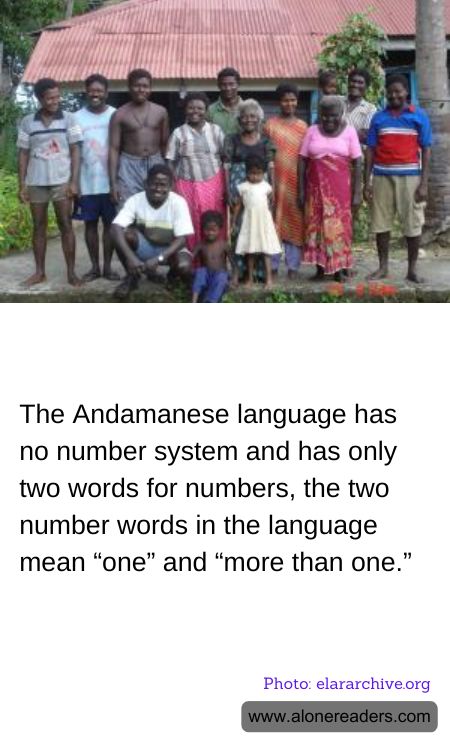
The Andamanese language, spoken by the indigenous people of the Andaman Islands, presents a fascinating case study in linguistic simplicity and cultural uniqueness. Unlike most languages that have developed complex numerical systems, the Andamanese language stands out for its minimalistic approach to numbers. It contains only two words to express quantity: one for "one" and another for "more than one." This intriguing feature offers a glimpse into how language and culture can shape each other in unexpected ways.
The absence of a detailed number system in the Andamanese language might initially seem limiting, especially from the perspective of societies that rely heavily on numbers for trade, technology, and daily life. However, this simplicity reflects the lifestyle and needs of the Andamanese people. Living in a close-knit community where large-scale transactions and precise numerical records are unnecessary, the Andamanese have thrived with a language that prioritizes other aspects of communication over numerical precision.
This linguistic characteristic challenges the assumption that all human societies naturally develop complex numerical systems. It suggests that the need for such systems is culturally determined rather than universally inherent. The Andamanese language demonstrates that a community can function effectively with a basic numerical vocabulary, relying instead on context and shared understanding to convey more complex ideas of quantity when necessary.
The Andamanese approach to numbers also highlights the adaptability and diversity of human languages. It serves as a reminder that language evolves to meet the specific needs of its speakers. In the case of the Andamanese, their language has evolved to suit a lifestyle that does not require detailed numerical distinctions. This adaptability is a testament to the flexibility of human communication and the myriad ways in which language can develop.
For linguists and anthropologists, the Andamanese language offers valuable insights into the relationship between language, culture, and cognition. It raises intriguing questions about how different societies perceive and categorize the world around them. The Andamanese example encourages a broader understanding of what constitutes a "complete" language, challenging the notion that complexity is a necessary component of linguistic richness.
In a world where numerical precision often dominates, the Andamanese language stands as a poignant reminder of the diversity of human expression. It underscores the idea that language is not merely a tool for communication but also a reflection of the values and priorities of its speakers. As we continue to explore the vast tapestry of human languages, the Andamanese language invites us to appreciate the beauty of simplicity and the profound ways in which language and culture are intertwined.
