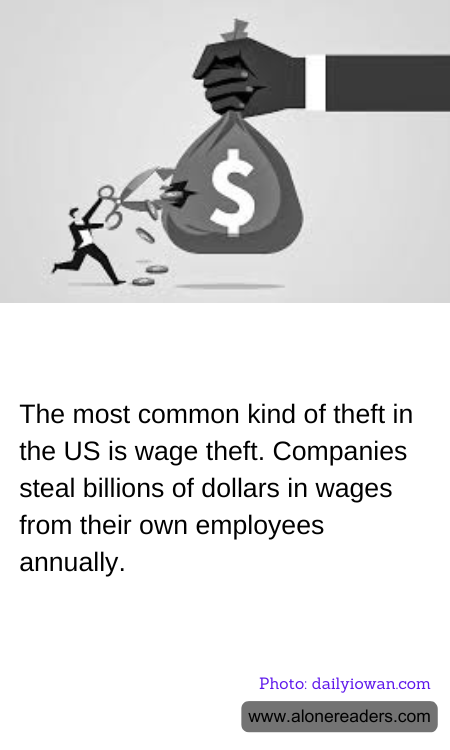
Wage theft is an insidious issue that affects millions of workers across the United States, yet it often goes unnoticed in the broader conversation about theft and crime. Unlike the more visible forms of theft such as burglary or shoplifting, wage theft occurs quietly and systematically, often perpetrated by employers who fail to pay their workers what they are legally owed. This form of theft is not only the most common but also one of the most damaging, with billions of dollars in wages stolen from employees annually.
At its core, wage theft encompasses a variety of illegal practices by employers. These include paying less than the minimum wage, failing to pay overtime, forcing employees to work off the clock, misclassifying workers as independent contractors to avoid paying benefits, and denying legally mandated breaks. Such practices are not limited to any one industry; they are prevalent in sectors ranging from retail and hospitality to construction and agriculture. The victims are often the most vulnerable workers, including immigrants, low-income earners, and those with limited access to legal resources.
The scale of wage theft is staggering. Studies have shown that wage theft exceeds the combined total of all other forms of theft in the United States. According to the Economic Policy Institute, workers lose an estimated $15 billion annually to minimum wage violations alone. This figure does not account for other forms of wage theft, suggesting that the total amount stolen is significantly higher. For many workers, this loss of income can mean the difference between making ends meet and falling into poverty.
The impact of wage theft extends beyond individual workers, affecting families and communities. When workers are denied their rightful earnings, they have less money to spend on necessities such as food, housing, and healthcare. This, in turn, affects local economies and places additional strain on social services. Moreover, wage theft undermines trust in the labor market and creates an uneven playing field for businesses that comply with the law.
Addressing wage theft requires a multifaceted approach. Strengthening labor laws and enforcement mechanisms is crucial. This includes increasing funding for agencies like the Department of Labor, which is responsible for investigating wage theft claims, and imposing stiffer penalties on violators. Additionally, raising awareness about workers' rights and providing accessible legal resources can empower employees to stand up against unfair practices.
Community organizations and advocacy groups play a vital role in combating wage theft by educating workers and supporting them in legal battles. Public pressure and consumer advocacy can also drive change by holding companies accountable for their labor practices. Ultimately, tackling wage theft is not just about recovering lost wages; it is about ensuring dignity and fairness in the workplace for all employees.
In conclusion, wage theft is a pervasive problem that demands urgent attention. By recognizing its impact and taking concerted action, society can work towards a future where all workers receive the compensation they rightfully earn. Addressing this issue is not only a matter of justice but also a necessary step towards building a more equitable and sustainable economy.
