More About This Card
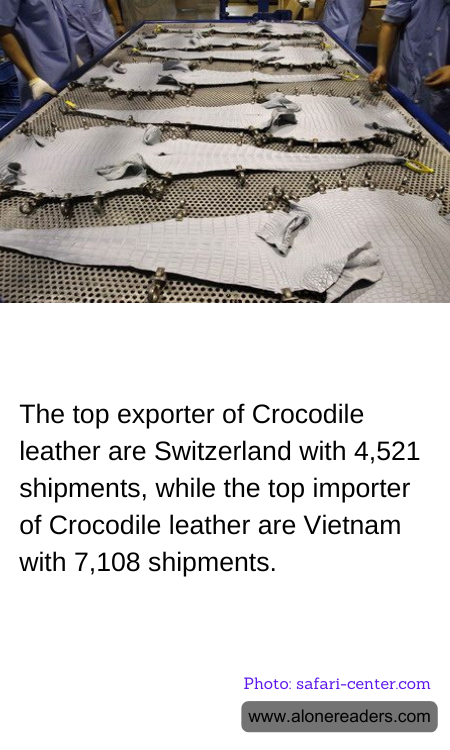
Crocodile leather, known for its durability and luxurious appeal, has become a highly sought-after material in the fashion industry. This exotic leather is used in the production of high-end goods such as handbags, shoes, and belts, making it a valuable commodity in international trade. Interestingly, the dynamics of the crocodile leather market reveal that Switzerland is the leading exporter, while Vietnam stands as the top importer.
Switzerland, with its reputation for precision and quality, has established itself as a key player in the export of crocodile leather, boasting 4,521 shipments. The country's expertise in processing and finishing leather to meet the high standards required by luxury brands has positioned it as a leader in this niche market. Swiss tanneries are known for their meticulous attention to detail, ensuring that the leather they produce is of the highest quality. This has enabled Switzerland to cater to the demands of luxury fashion houses around the world, which rely on premium materials to create their exclusive products.
On the other hand, Vietnam has emerged as the top importer of crocodile leather, with 7,108 shipments. The country's burgeoning fashion industry and its strategic position in the global supply chain have contributed to its significant demand for this exotic material. Vietnamese manufacturers have been quick to capitalize on the growing appetite for luxury goods, both domestically and internationally. By importing crocodile leather, they are able to produce high-quality products that appeal to discerning consumers who value craftsmanship and exclusivity.
The relationship between Switzerland and Vietnam in the crocodile leather trade highlights the interconnectedness of global markets. While Switzerland provides the expertise and quality in leather processing, Vietnam offers a robust manufacturing base and access to a wide consumer market. This synergy not only benefits both countries economically but also supports the global luxury goods industry, which relies on the availability of premium materials.
The trade in crocodile leather also underscores the importance of sustainable practices. As demand for exotic leathers continues to grow, it is crucial for both exporters and importers to adhere to ethical sourcing and production standards. This includes ensuring that crocodile populations are managed responsibly and that the trade complies with international regulations such as the Convention on International Trade in Endangered Species of Wild Fauna and Flora (CITES).
In conclusion, the dynamic between Switzerland as the top exporter and Vietnam as the top importer of crocodile leather illustrates the complex and interconnected nature of the global luxury goods market. As both countries continue to play pivotal roles in this trade, the emphasis on quality, craftsmanship, and sustainability will remain key drivers in meeting the demands of consumers worldwide.