More About This Card
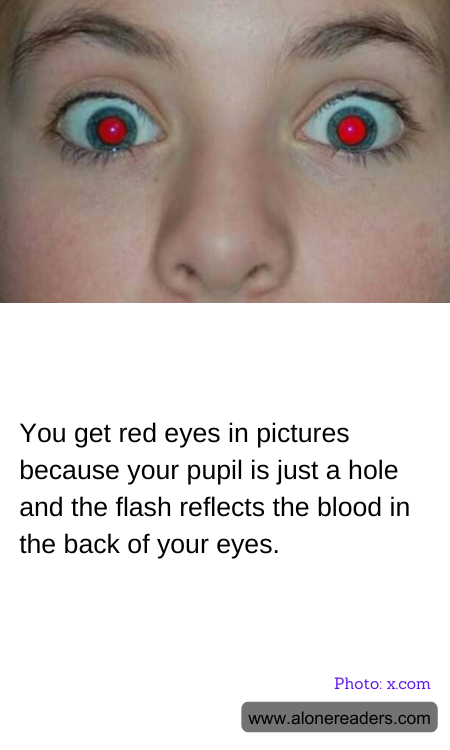
Have you ever wondered why your eyes sometimes appear red in photographs? This common phenomenon, often referred to as "red-eye," is a result of the intricate workings of the human eye and the interaction with camera flash. Understanding why this happens can be both fascinating and enlightening.
At the heart of this phenomenon is the pupil, which is essentially a hole in the center of the eye that allows light to enter. In low-light conditions, such as those often encountered when taking photos indoors or at night, the pupil dilates to let in more light. When a camera flash goes off, it emits a sudden burst of bright light. This light enters the eye through the dilated pupil and illuminates the interior of the eye.
The interior of the eye is lined with a rich network of blood vessels, particularly in the retina, which is located at the back of the eye. The retina is responsible for capturing light and converting it into signals that the brain can interpret as images. However, when the flash of a camera hits the retina, it reflects off these blood vessels. The red color that we see in photographs is actually the reflection of the blood-rich retina, which gives off a reddish hue due to the blood vessels.
This effect is more pronounced in low-light conditions because the pupils are more dilated, allowing more light to enter and reflect back. Additionally, the angle at which the flash hits the eye and the proximity of the camera to the subject can also influence the intensity of the red-eye effect. Cameras with the flash positioned close to the lens are more likely to produce red-eye, as the light travels directly into the eye and back to the camera.
While red-eye can be an unwanted effect in photographs, there are several ways to minimize or eliminate it. Many modern cameras and smartphones come equipped with red-eye reduction features. These features typically work by emitting a series of pre-flashes before the main flash, causing the subject's pupils to constrict and reducing the amount of light that enters the eye. Additionally, increasing the ambient light in the room or using an external flash positioned away from the camera lens can also help reduce red-eye.
Understanding the science behind red-eye not only demystifies this common photographic issue but also highlights the remarkable complexity of the human eye. By appreciating the interplay between light, the eye, and the camera, we can better capture the world around us without the distraction of those unexpected crimson glows.