More About This Card
In the vast expanse of space, where gravity is virtually absent, the human body undergoes a series of fascinating transformations. One such intriguing phenomenon is the peeling of skin on astronauts' feet. This peculiar occurrence is not just a curious side effect of space travel but a testament to the body's remarkable adaptability to new environments.
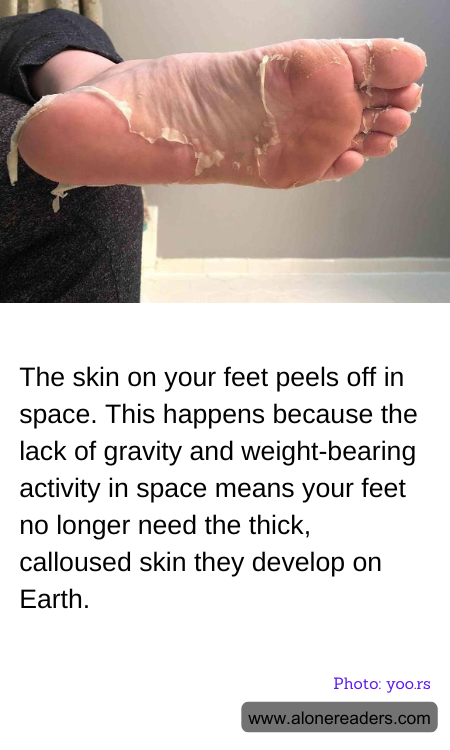
On Earth, our feet endure constant pressure and friction, leading to the development of thick, calloused skin. This toughened layer acts as a protective barrier, shielding our feet from the wear and tear of daily activities. However, in the microgravity environment of space, the dynamics change dramatically. Without the constant pressure and weight-bearing activities, the necessity for such thick skin diminishes. As a result, astronauts often find that the calloused skin on their feet begins to peel off.
The process is quite simple: in the absence of gravity, the skin that would typically be worn away through walking and other activities remains intact. Over time, this skin becomes loose and eventually peels away, revealing softer, more sensitive skin underneath. This shedding is a natural response to the reduced need for protection in a gravity-free environment.
While the peeling of foot skin might sound uncomfortable, astronauts report that it is generally painless. In fact, many find it to be a minor inconvenience compared to other challenges faced during space missions. However, it does require some attention to hygiene and cleanliness, as the floating skin particles can become a nuisance in the confined quarters of a spacecraft.
The phenomenon of peeling skin in space highlights the incredible adaptability of the human body. It also underscores the importance of understanding how prolonged space travel affects our physiology. As humanity sets its sights on longer missions, such as journeys to Mars, comprehending these changes becomes crucial for ensuring the health and well-being of astronauts.
In preparation for these extended missions, space agencies are studying the effects of microgravity on the human body in greater detail. This research not only helps in developing strategies to mitigate potential health issues but also provides valuable insights into the resilience and adaptability of human biology.
In conclusion, the peeling of skin on astronauts' feet is a small yet significant example of how space travel alters the human body. It serves as a reminder of the challenges and wonders of exploring the final frontier, where even the most mundane aspects of daily life are transformed by the absence of gravity. As we continue to push the boundaries of space exploration, understanding these changes will be key to ensuring the success and safety of future missions.