More About This Card
In the whimsical world of literature, few names resonate as profoundly as Theodor Seuss Geisel, better known as Dr. Seuss. His imaginative tales have captivated generations, offering not only entertainment but also a rich tapestry of language and creativity. Among his many contributions to the literary world, one stands out for its unexpected cultural impact: the first documented appearance of the word "nerd."
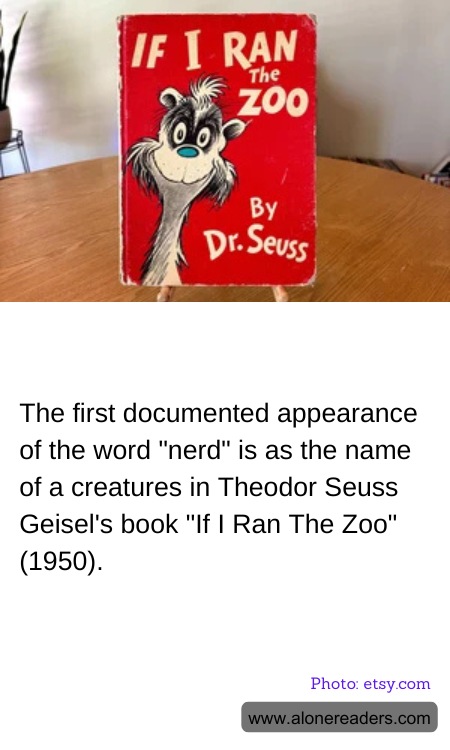
The term "nerd" made its debut in Dr. Seuss's 1950 book, "If I Ran the Zoo." In this playful narrative, young Gerald McGrew imagines a fantastical zoo filled with exotic and peculiar creatures, one of which he whimsically names a "nerd." This creature, nestled among other fantastical beings, was just another example of Dr. Seuss's boundless creativity. However, unlike many of his other inventions, the "nerd" would transcend the pages of the book to become a staple in the English lexicon.
Initially, the word "nerd" did not carry the connotations it does today. In the context of Dr. Seuss's book, it was simply a quirky name for a fictional animal. However, as the 1950s progressed, the term began to evolve. By the 1960s, "nerd" had entered the American slang vocabulary, often used to describe someone who was overly studious or socially awkward. This evolution in meaning reflects the dynamic nature of language, where words can shift and adapt to cultural trends and societal changes.
The journey of "nerd" from a Seussian creature to a widely recognized term is a testament to the power of literature to influence language and culture. Over the decades, the word has undergone further transformation. What was once a pejorative label has been embraced by many as a badge of honor, celebrating intellectual curiosity and passion for niche interests. Today, being a "nerd" is often associated with expertise in technology, science, and various fandoms, reflecting a broader acceptance and appreciation of diverse interests.
Dr. Seuss's inadvertent contribution to the English language highlights the unpredictable ways in which literature can shape and reflect societal values. His playful invention of a "nerd" in "If I Ran the Zoo" serves as a reminder of the enduring impact of creativity and imagination. As we continue to explore the ever-expanding universe of words, the story of the "nerd" stands as a charming example of how a simple idea can evolve into a cultural phenomenon, bridging the gap between fiction and reality.