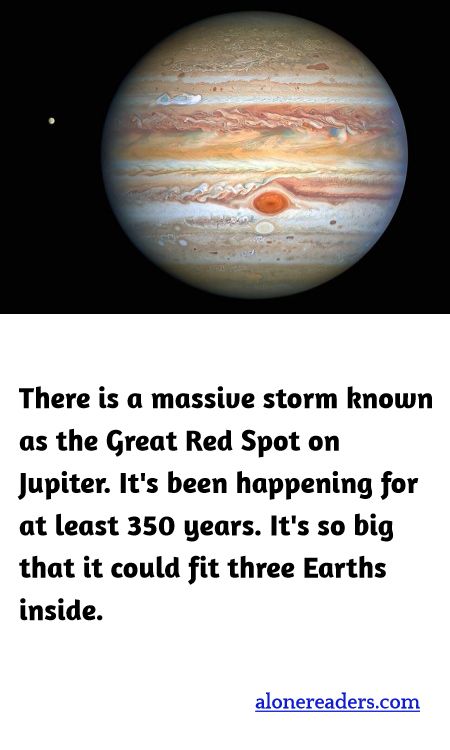
The Great Red Spot on Jupiter is an enormous, high-pressure storm that has been churning for at least 350 years. This fascinating atmospheric phenomenon is one of the solar system’s most enduring mysteries. Located 22 degrees south of Jupiter’s equator, the storm is a prominent feature easily identifiable even from Earth-based telescopes. Its distinct, reddish hue is due to unknown chemicals that are pulled into the storm, possibly from lower regions of Jupiter’s atmosphere.
The sheer size of the Great Red Spot is staggering—it is twice the diameter of Earth. This immense scale means that at its widest point, three Earths could fit within its boundaries. The storm rotates counterclockwise, with a period varying from about six to 14 Earth days, depending on Jupiter's latitude.
The longevity and persistence of the Great Red Spot are subjects of great interest and debate among astronomers. The prevailing theory suggests that the storm is stable due to it being trapped between two jet streams that are moving in opposite directions. However, some evidence collected in recent years indicates that the Great Red Spot might be shrinking. NASA and other space agencies continually monitor Jupiter to understand whether these changes could hint at a greater climatic shift in its atmosphere or are simply normal fluctuations.
Understanding the mechanics and dynamics of the Great Red Spot not only reveals more about Jupiter itself but may also provide deeper insights into atmospheric systems on other planets, including Earth. By studying such extraterrestrial weather patterns, scientists hope to refine their models of atmospheric dynamics and perhaps even discover new facets of planetary science.
