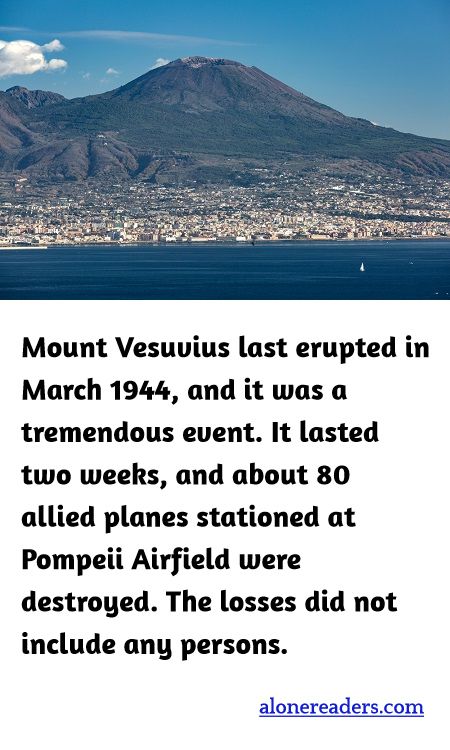
Mount Vesuvius, one of the most notorious and active volcanoes in the world, provided a dramatic spectacle with its last eruption in March 1944. This eruption, significant for its intensity and impact, lasted for a full two weeks, showcasing the formidable power of nature. Unique to this event was the interaction between the volcanic activity and the ongoing human conflict of World War II, specifically affecting the Allied forces stationed in Italy.
During this 1944 eruption, the skies over Pompeii Airfield were filled with ash and smoke, leading to the destruction of approximately 80 allied aircraft. The ash, spewed from Vesuvius, blanketed the airfield and suffocated the engines and machinery, rendering them useless. This loss was a significant blow to the Allied military capabilities in the region at a critical time during the war. The eruption, however, did not cause any direct human casualties, a fact that stands as a small consolation in the face of such destruction.
The impact of the eruption was not limited to military losses. It also caused considerable disruptions in the local communities. Thousands of residents were evacuated from their homes, as towns and villages around the slopes of Vesuvius were engulfed in ash and debris. The agricultural landscape, vital to the local economy, suffered extensive damage, with crops buried under the fallout from the volcano.
The 1944 eruption served as a stark reminder of the looming threat that Vesuvius represents to the densely populated regions that surround it. Vesuvius, notorious for its catastrophic eruption in 79 AD that buried the cities of Pompeii and Herculaneum, remains a focal point for volcanologists and geologists who continuously monitor its activity. The volcano's unpredictable nature and the potential for future eruptions pose ongoing risks, prompting advanced planning and disaster preparedness to mitigate potential damages and protect the lives of those in its shadow.
Reflecting on the 1944 eruption thus provides not just a historical account of a natural disaster intersecting with human conflict but also underscores the ongoing challenges and risks of living in close proximity to one of the world's most famous volcanoes. As such, Vesuvius remains a symbol of both natural beauty and potential devastation, ever the watchful sentinel over the Bay of Naples.
