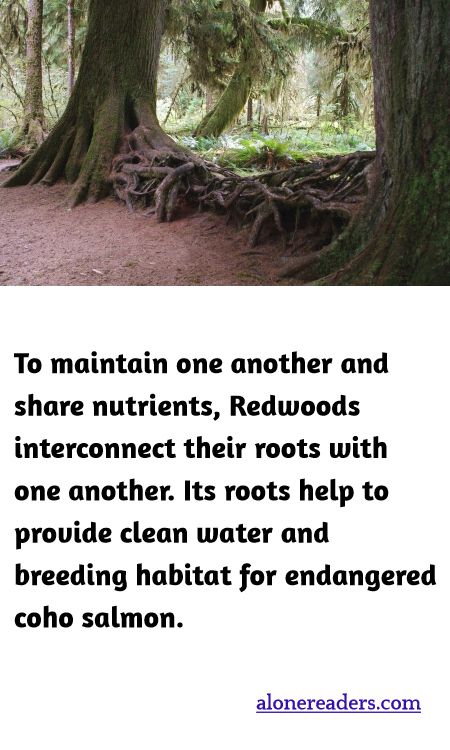
Redwood trees, known for their majestic height and ancient presence, exhibit a remarkable ecological characteristic: they interconnect their roots with one another, forming a resilient and cooperative network beneath the forest floor. This interconnection allows them to share nutrients and stabilize each other, ensuring mutual growth and survival. This interconnected root system is not only crucial for the redwoods themselves but has broader environmental implications, including significant benefits for water quality and wildlife habitats.
The root systems of redwoods play a critical role in water filtration, helping to maintain the clarity and cleanliness of water systems that are essential for various species, including the endangered coho salmon. Coho salmon, which spawn in the coastal rivers of the Pacific Northwest, depend on clean, cool, and well-oxygenated water for their eggs to develop healthily. Sediment and pollutants in water can obstruct this process, but redwoods help to mitigate these effects. Their roots act like a sieve, filtering out sediments and pollutants before they can reach the streams and rivers, maintaining cleaner water ecosystems.
Moreover, the structure of the redwood roots provides physical support to riverbanks, preventing excessive erosion and the subsequent sedimentation of streams and rivers. This notarially helps in maintaining the required habitat conditions for coho salmon breeding. The shade provided by their extensive canopies also plays a crucial role in regulating water temperatures, further aiding the survival of temperature-sensitive species like the coho salmon.
Additionally, the nutrient exchange facilitated by the interconnected roots of redwoods enhances the overall fertility of the forest soil, supporting a diverse range of plant and animal species. This biodiversity is crucial for maintaining a balanced ecosystem, which benefits all species inhabiting the area.
In conclusion, the interconnected roots of redwood trees exemplify the profound interconnectedness of natural ecosystems. They not only support the trees themselves but also play a vital role in water purification and the provision of critical habitat for endangered species such as coho salmon. Protecting these majestic trees is not just about preserving a single species but about maintaining the health of entire ecosystems on which many forms of life depend. This insight into their ecological role highlights the importance of conservation efforts aimed at these towering giants and their surrounding environments.
