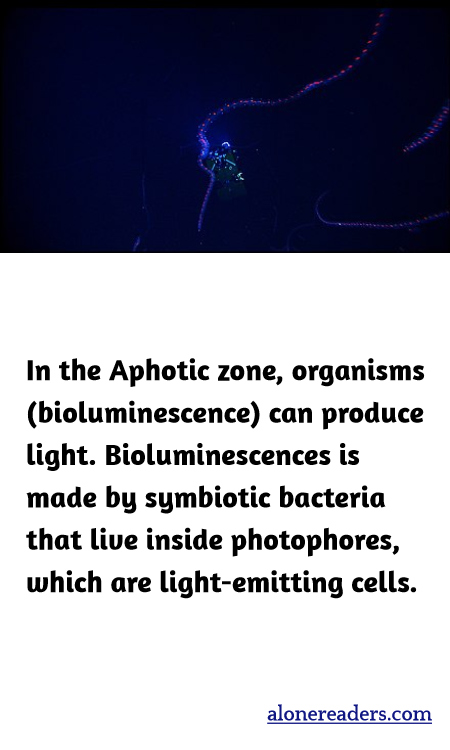
The aphotic zone, a mysterious realm found deep in the ocean, is perpetually shrouded in darkness. As sunlight fails to penetrate beyond depths of approximately 200 meters, the creatures residing in this remote environment have evolved unique adaptations to survive and interact in their pitch-dark habitat. Among the most fascinating of these adaptations is bioluminescence—the ability of organisms to produce light.
Bioluminescence in the aphotic zone is primarily used for attracting prey, mating, and deterring predators. The light is produced through a chemical reaction that involves luciferin, a light-emitting molecule, and luciferase, an enzyme that catalyzes the reaction. The product of this reaction is light, which can be emitted in various hues depending on the species.
Many deep-sea animals like squids, anglerfish, and certain species of jellyfish host symbiotic bacteria within specialized cells known as photophores. These bacteria are bioluminescent and aid their hosts by producing light. In return, the bacteria receive nutrients and a safe environment to live, which exemplifies a symbiotic relationship. The light emitted by the bacteria can be used by the host to confuse predators, lure prey, or communicate with potential mates.
For instance, the anglerfish uses bioluminescence in a cunning way. It has a rod-like extension from its head that ends in a light-producing organ called an esca, which is derived from modified photophores. The anglerfish manipulates this glowing lure to attract unsuspecting prey towards its mouth. Meanwhile, some species of squid eject bioluminescent fluid, or employ flashing light patterns, to thwart or evade predators.
Apart from symbiosis, some organisms independently manufacture their light. The capability to produce bioluminescence has evolved multiple times across various taxa in the tree of life, indicating its ecological importance. Scientists are continuously exploring the potential applications of bioluminescence in medical and technological fields. For example, the properties of luciferase are being utilized in research related to cancer treatment and monitoring of drug effects inside human cells.
The exploration of the aphotic zone continues to reveal new species and surprising biological systems, demonstrating the vast adaptability and resourcefulness of life under conditions that would seem inhospitable or even impossible for survival. Through the study of these deep-sea bioluminescent organisms, researchers not only expand our understanding of biodiversity and life's adaptability but also uncover biochemical methods and systems that could revolutionize fields outside of marine science.
