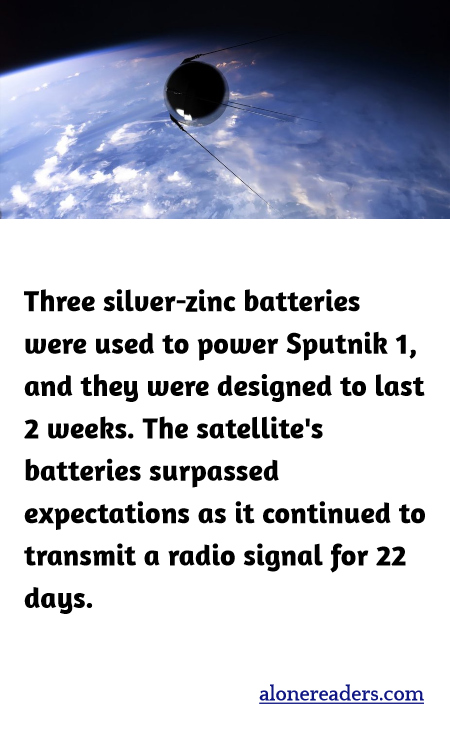
When Sputnik 1 was launched into orbit on October 4, 1957, it was equipped with three silver-zinc batteries, specially designed to sustain its operational functions for approximately two weeks. This timeframe was set to match the anticipated duration of the mission, aiming to collect data from the upper atmosphere and test the feasibility of satellite communication. Remarkably, these batteries and the satellite itself surpassed their expected lifespans.
Sputnik 1 continued to transmit a radio signal back to Earth well beyond the two-week mark, managing to send signals for a total of 22 days. This performance was a significant achievement at the time, considering the limited technology and knowledge about space conditions. The extended operation of the batteries provided scientists with additional time to monitor the satellite’s beeping signals, which were crucial for gathering scientific data and verifying the satellite's orbital parameters.
The success of the silver-zinc batteries in Sputnik 1 had broader implications for space technology, especially in the design and utilization of power sources in spacecraft. This early experience highlighted the resilience and potential of silver-zinc chemistry in battery production, which was relatively advanced at the time for its high energy-to-weight ratio, a critical factor in spaceflight where payload weight is a major concern.
Furthermore, the extended life of Sputnik 1's batteries offered the world a longer period to witness the dawn of the space age, with its famous beeps being a symbol of human advancement into outer space. This accomplishment not only provided valuable lessons in power management and spacecraft design but also stoked public interest and spurred further investment and research into space technology. The unexpected longevity of its power source helped to pave the way for more sophisticated satellites and missions, ensuring the reliability and efficiency of the power systems used in space exploration.
