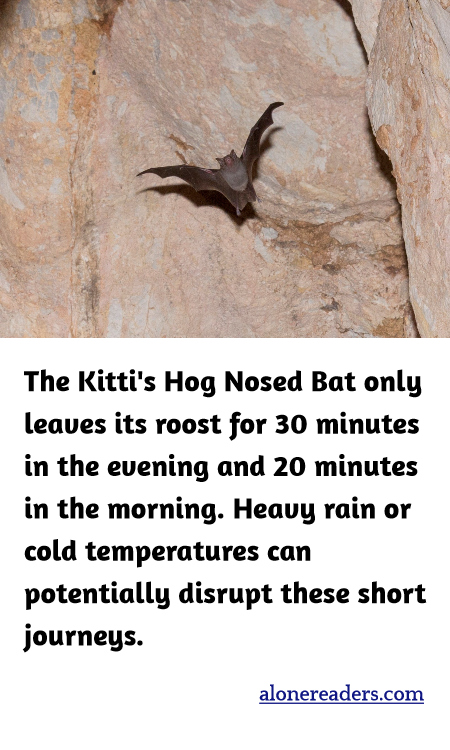
Among the smallest mammals in the world, the Kitti's hog-nosed bat, also affectionately known as the bumblebee bat, leads a meticulous and delicate existence in the limestone caves along riverbanks in western Thailand and southeast Burma (Myanmar). With an average weight of just about two grams—roughly the weight of a dime—and a wingspan that barely stretches beyond six inches, the intricacies of their survival are particularly fascinating.
The life of a Kitti's hog-nosed bat is characterized by brevity and precision, particularly when it comes to its foraging activities. Each day, this miniscule bat emerges from the shadows of its roost for a mere 30 minutes in the evening and 20 minutes in the morning. During these critical windows, the bat hunts for insects, which are vital for its survival. The timing of these excursions is determined by the need to avoid predators and optimize feeding efficiency. This limited exposure to the outside world makes every second outside the cave precious.
However, the bat's already restricted foraging time can be further compromised by environmental factors. Heavy rainfall and cold temperatures pose significant disruptions. Rain can heavily impact the availability and behavior of the insects they feed on, while colder temperatures can affect their body’s ability to function efficiently. For a creature so small, energy conservation is crucial, and unfavorable weather conditions can deplete their energy reserves much faster than they can be replenished.
The specific nature of their habitat—restricted to just a few locales—further accentuates their vulnerability. The caves they occupy offer the necessary protection and climatic conditions they need to survive. Disturbances to these delicate ecosystems, whether through human interference or natural changes, pose grave threats to their populations.
Conservation efforts are thus essential in ensuring the survival of the Kitti’s hog-nosed bat. Protecting their habitats, monitoring populations, and understanding their ecological needs are all critical steps in safeguarding this unique species. Despite their diminutive size and elusive nature, their role in the ecosystem as insect controllers highlights the broader ecological impact they have, underlining the importance of maintaining biodiversity even at the smallest scale.
