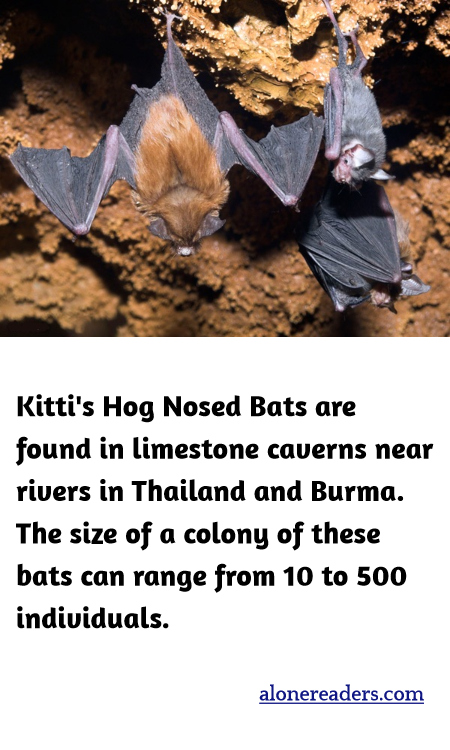
Kitti's Hog-Nosed Bats, also known as bumblebee bats due to their minuscule size, represent one of the world's smallest mammal species. Found in the limestone caverns close to rivers in Thailand and Burma (Myanmar), these bats are distinguishable by their distinct hog-like noses and comparatively large, pigmented ears. They are intriguing creatures not only because of their size but also due to their specialized habitats and social structures.
The colonies of Kitti's Hog-Nosed Bats vary significantly in size, typically ranging anywhere from about 10 to 500 individuals. The size of the colony often depends on the availability of suitable roosting spaces within the limestone caves they inhabit. These caves provide a stable microclimate that is crucial for their survival. The stable temperatures and high humidity levels within these caverns offer ideal conditions for these bats, helping them conserve energy.
These bats are primarily insectivorous, feeding on insects they catch while in flight. Their foraging activity generally occurs at dusk, when the risk of predation is minimized. This twilight activity aligns with the insects’ peak times, making it an efficient time for the bats to hunt. However, Kitti's Hog-Nosed Bats are known for their extremely limited foraging range, typically venturing only about a kilometer from their roost to feed. This limited range, together with habitat disturbances, poses significant challenges for their population.
Conservation efforts are critical for Kitti's Hog-Nosed Bats, as they are currently listed as vulnerable by the International Union for Conservation of Nature (IUCN). The primary threats to their survival include habitat destruction due to mining and quarrying in limestone areas and disturbances from tourism. Protecting their natural habitats and implementing stricter regulations on cave access are essential strategies for their conservation.
The unique physical and behavioral traits of Kitti's Hog-Nosed Bats make them a fascinating subject of study and an important species for biodiversity in their native regions. Efforts to preserve their environment and understand their ecological role better are crucial for ensuring that future generations may also witness the remarkable spectacle of these tiny bats flitting through the twilight skies.
