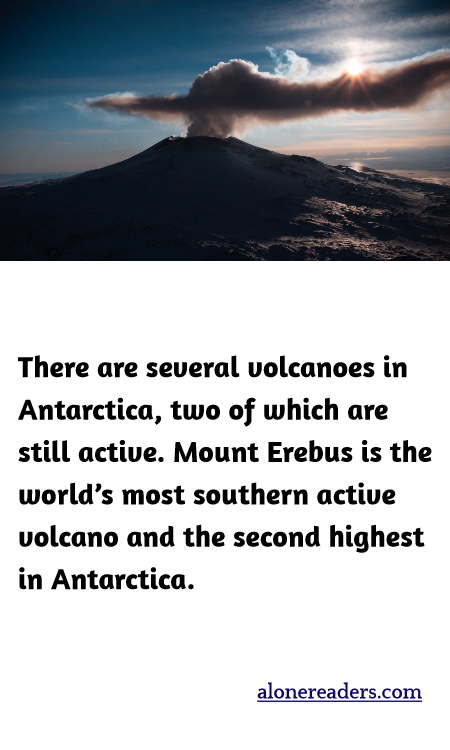
Antarctica, the coldest continent on Earth, is generally associated with ice, polar bears, and extreme cold, but it is also home to active volcanic activity. Among the several volcanoes situated there, Mount Erebus stands out prominently. It is not only the most southern active volcano in the world but also the second-highest peak in Antarctica, making it a significant geographical feature on the icy continent.
Mount Erebus reaches approximately 3,794 meters (12,448 feet) above sea level and is famous for its persistent lava lake, which has been active for decades. The volcano was first discovered in 1841 by the polar explorer Sir James Clark Ross, who named it after one of his ships. Its continuous activity provides unique research opportunities for scientists studying geology and volcanic activity in extreme environments.
The presence of Mount Erebus and other volcanoes like Mount Terror, which is dormant, highlights the geological dynamism of Antarctica. Despite its icy exterior, the continent sits on several tectonic plates, including the Pacific Plate and the Antarctic Plate, whose movements create volcanic activity. This juxtaposition of fire and ice not only shapes the landscape but also affects the local atmosphere and ecosystems, influencing everything from ice melt patterns to local weather conditions.
Besides Mount Erebus, Deception Island is another notable volcanic site in Antarctica. It is unique because it is one of the few places in the world where ships can sail directly into the center of a restless volcano. Historically, it erupted in 1967, 1969, and 1970, causing significant damage to scientific stations on the island. The caldera of Deception Island is evidence of massive eruptions that must have occurred there in the past, suggesting a volatile volcanic history that contrasts sharply with the serene ice sheets that cover much of the continent.
The study and monitoring of these volcanoes are crucial as they can provide insights into the past and future climatic conditions not only of Antarctica but globally. Volcanic eruicides, for example, can have far-reaching effects on global weather patterns and climate. The research conducted in these remote locations is challenging yet vital for understanding complex global geological and environmental processes.
In sum, Antarctica's volcanoes, particularly Mount Erebus, offer a fascinating glimpse into the dynamic processes that continue to shape our Earth. They remind us that even in the most unlikely places, geological activity is continually molding the planet's landscape, offering valuable lessons about the Earth's past, present, and future.
