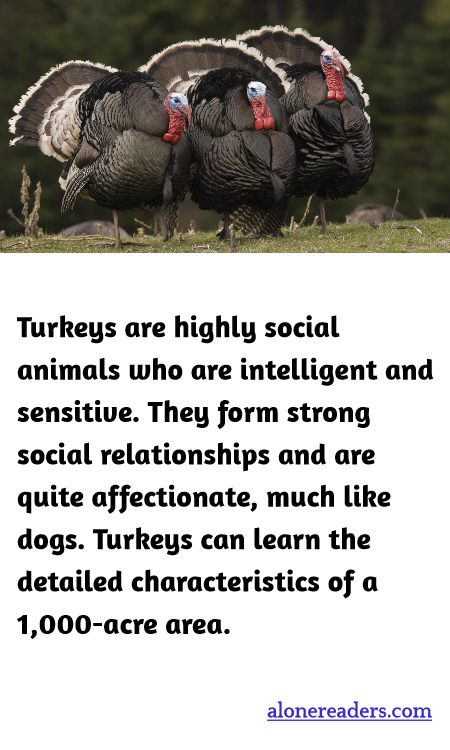
Turkeys are often associated with festive meals and Thanksgiving dinners, but beyond their role in cuisine, these birds are intelligent, sensitive, and highly social creatures. With a surprising depth of emotional and cognitive abilities, turkeys showcase behaviors and social structures that can rival those of the often-celebrated household pets like dogs and cats.
In their natural habitats, turkeys are known to form strong social bonds, often congregating in groups that can exhibit complex social hierarchies. These birds are not only capable of recognizing each other through detailed characteristics, but they also develop lasting relationships. Similar to the loyalty seen in dogs, turkeys often stick by their companions and display signs of distress when separated from them. This level of affection and care for one another is a testament to their social nature.
Turkeys are also remarkably intelligent. Research suggests that they are capable of memorizing detailed specifics of extensive areas—up to a whopping 1,000 acres. This exceptional spatial awareness helps them navigate their surroundings, locate food sources, and avoid predators effectively. Such cognitive prowess is crucial for their survival and is indicative of their physiological and psychological complexity.
Moreover, turkeys have shown the capacity to learn from experience and adapt to environmental changes, behaviors that denote a high level of what scientists might classify as ‘intelligence’. They can also recognize humans and other animals as individuals, showcasing an ability to differentiate between and react differently to various beings in their environment.
Understanding these aspects of turkey behavior and cognition challenges the common perceptions many hold about these birds, encouraging a more respectful and appreciative perspective on turkeys as curious, emotional, and intelligent animals. Their rich social structures and emotional depth make turkeys more than just holiday centerpieces; they are fascinating creatures with advanced social behaviors and learning capabilities. Embracing this broader understanding not only enriches our knowledge of the animal kingdom but also fosters a greater empathic connection to the creatures with whom we share our world.
