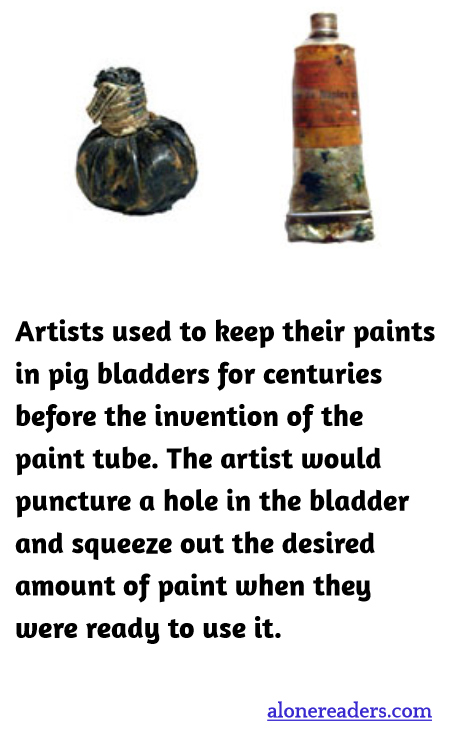
Before the advent of modern conveniences in art supplies, artists had to rely on much more primitive methods to store their paints. One of the most interesting and somewhat graphic methods involved the use of pig bladders. For centuries, pig bladders served as an essential tool for storing and preserving paint, highlighting a period where resourcefulness was key to artistic practice.
Pig bladders, when cleaned and dried, were both flexible and semi-transparent, making them suitable for containing various substances, including paint. Artists would fill these bladders with pigment mixed with a binder, creating a rudimentary version of today's artist's tubes of paint. The natural membrane of the bladder provided a seal against air, helping to keep the paint from drying out too quickly.
To use the paint, the artist would simply puncture a small hole in the bladder with a tack or needle and squeeze the desired amount of paint onto their palette. Once finished, the hole could be resealed using a pin or plugged with wax to prevent the paint from drying out. This method was not only practical but also economical, as it allowed artists to make the most of their materials without significant waste.
The invention of the paint tube in 1841 by John Goffe Rand revolutionized this process and marked a significant turning point in art history. Paint tubes made it easier and more efficient for artists to transport their paints without the risk of leakage or spoilage, which in turn facilitated the practice of painting outdoors or en plein air. This technological advancement had a profound impact on the art world, enabling new artistic movements like Impressionism, which relied heavily on the ability to capture natural light and colors outside the confines of the studio.
The transition from pig bladders to paint tubes is a vivid example of how technological innovations can redefine artistic practices and open up new possibilities for creativity. It also serves as a reminder of the often overlooked aspects of everyday life that can hold significant importance in the broader historical and cultural context.
