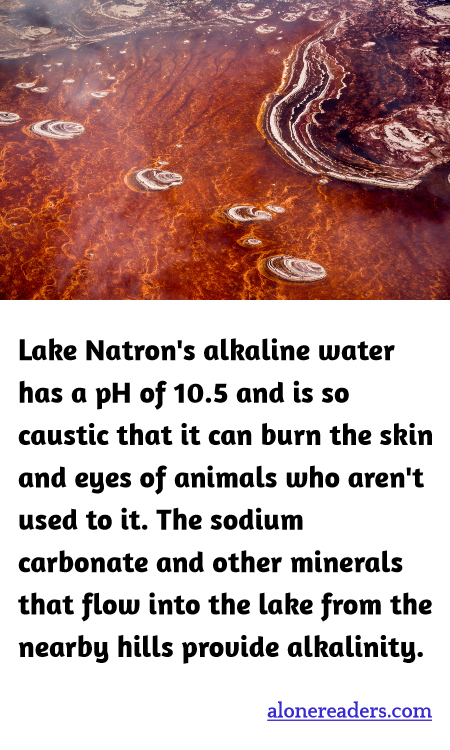
Lake Natron in Tanzania is a rare and extreme environment marked by its bright-red waters and almost otherworldly surrounds. The lake's high alkalinity, with a pH as high as 10.5, is due to the sodium carbonate and other minerals that leach from the surrounding hills. This sodium carbonate was once used in Egyptian mummification, indicating its potent preservative qualities. The harsh conditions of Lake Natron result in temperatures that can reach up to 60 degrees Celsius (140 degrees Fahrenheit), and the water is so caustic it can burn the skin and eyes of animals unadapted to its harsh environment.
Despite these inhospitable conditions, Lake Natron supports a thriving ecosystem of specialized species. Most notably, it is an important breeding site for the lesser flamingo. These flamingos have evolved to thrive in alkaline lakes and depend on Lake Natron as their primary breeding site. The microorganisms that flourish in its salty crust of sodium carbonate serve as food for the flamingo larvae. Furthermore, the lake's hostile environment provides a safe haven from predators, who generally avoid the caustic waters.
The distinct ecology of Lake Natron highlights the remarkable adaptations of nature. However, the lake’s delicate balance is threatened by human activity, including proposed development projects like soda ash plants which would utilize the lake's high levels of sodium carbonate. Such industrial activities present a significant threat to the lake’s ecosystem, particularly to the flamingo populations whose breeding may be disrupted or displaced by changes in the environment.
Conservation efforts are in place to protect and study Lake Natron’s unique landscape and biodiversity. Environmentalists and scientists stress the importance of preserving such unique ecosystems, which offer not only insights into ecological resilience and adaptation but also contribute to the global biodiversity. Lake Natron serves as a stark reminder of nature's ability to flourish under the most extreme conditions and the delicate balance required to sustain these unique environments.
