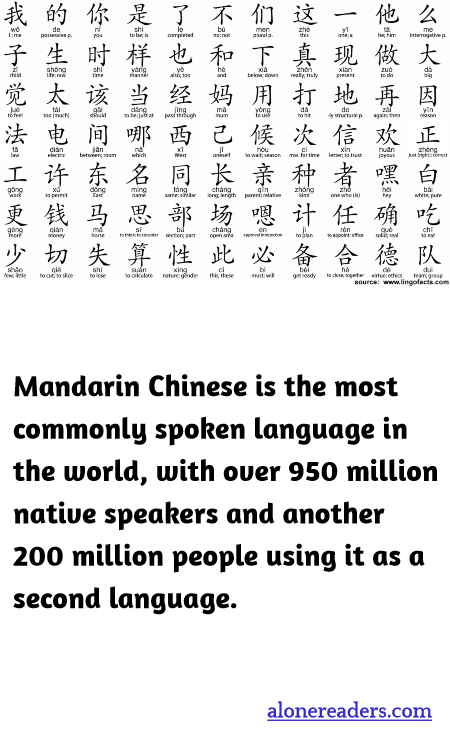
Mandarin Chinese holds the distinction of being the most widely spoken language globally, a reflection not only of China's enormous population but also of its increasing economic and cultural influence around the world. With approximately 950 million native speakers and an additional 200 million individuals who have learned it as a second language, Mandarin's impact is undeniable in both global commerce and international diplomacy.
Learning Mandarin is considered a significant asset in various professional fields, including international business, diplomacy, and translation. As China continues to expand its role as a major global economy, the demand for Mandarin-speaking professionals is expected to rise, further embedding the language in global economic frameworks.
Moreover, Mandarin Chinese is a language rich in history and culture. Its written form, which uses thousands of unique characters, is often seen as a direct link to ancient Chinese civilization. This connection adds a cultural depth and historical continuity that is inherently appealing to learners and scholars alike.
However, the complexity of Mandarin, with its tonal variations and character-based script, poses significant challenges to new learners, especially those accustomed to alphabetic writing systems. Yet, this complexity also invites a deeper engagement with the language, often leading to a greater appreciation of its nuance and expressiveness.
The spread of Mandarin Chinese around the world is facilitated not only by migration but also through educational initiatives. China’s Confucius Institutes, established across numerous countries, aim to promote Chinese language and culture. Programs offered by these institutes, along with language courses at universities and private schools worldwide, contribute to the growing prevalence of Mandarin as a second language.
In conclusion, Mandarin Chinese is not just a tool for communication but also a bridge that connects users to one of the world’s oldest civilizations. Its global spread reflects broader economic trends and cultural exchanges, positioning Mandarin as a key player in the dialogue between nations in the 21st century. As China continues to influence global affairs, the language will likely gain even more speakers, underscoring its importance in shaping our global future.
