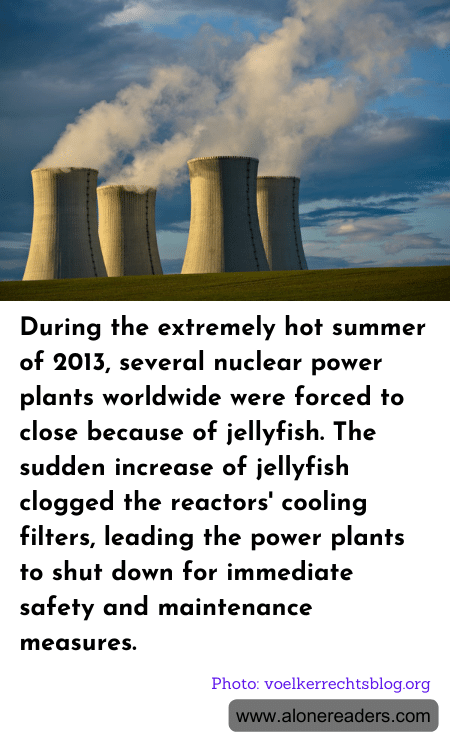
In 2013, the world witnessed an unusual environmental challenge as a surge in jellyfish populations led to the temporary shutdown of several nuclear power plants across the globe. During the sweltering heat of that summer, these aquatic creatures swarmed and blocked the water cooling systems essential for the safe operation of nuclear reactors. Typically, nuclear facilities use seawater to maintain the necessary coolness of their reactors. However, jellyfish can pose a significant risk by clogging the cooling water intakes, making it impossible for the plant to function without potential overheating.
This phenomenon highlighted a little-discussed interaction between marine life and energy infrastructure. The shutdowns underscored the vulnerability of some of the world’s most critical facilities to natural ecological shifts, often driven by broader environmental changes. Scientists speculate that rising sea temperatures and overfishing, depleting the predators of jellyfish, are among the potential causes of the surges in jellyfish populations. This situation not only pointed out the delicate balance of marine ecology but also posed questions about how to predict and prevent such problems in the future.
Utilities and energy providers had to consider immediate actions like installing more robust filtration systems or designing alternate intake structures less vulnerable to blockages. Moreover, the jellyfish incidents served as a wake-up call to environmental scientists and marine biologists to explore more about jellyfish blooms and their dynamics. This has spurred increased research into how climate change is affecting marine life and, indirectly, our energy infrastructure.
Addressing these challenges is crucial, as nuclear power remains a significant part of the global energy mix, essential for reducing carbon emissions. The jellyfish-induced shutdowns not only illustrate the intersecting issues of energy, ecology, and climate change but also remind us of the need for resilient systems that can withstand the unexpected shifts in our natural environment.
